What Is the Best Vitals Machine from China?

Choosing the best vitals machine from China requires more than comparing prices or screen sizes. Accuracy, validation, durability, and after-sales support matter more.

MarketsandMarkets’ 2024 Patient Monitoring Market report estimates the sector will grow from approximately USD 42 billion in 2024 to USD 56.6 billion by 2029. That growth reflects rising demand for bedside monitors, wearable sensors, and remote patient monitoring. However, market growth does not prove that every device performs reliably. It only shows expanding demand.

The World Health Organization’s Global Strategy on Digital Health 2020–2025 emphasizes interoperability, data quality, and patient-centered care. These principles should guide any vitals machine evaluation. Buyers should examine pulse oximetry accuracy, blood pressure validation, temperature consistency, alarm performance, battery life, and software security. Look for ISO 13485 manufacturing systems and relevant IEC 60601 standards. Export requirements may also include FDA, CE, or other regional registrations.

Dr. Eric Topol, a leading digital-medicine expert, has said, “The smartphone will become the stethoscope of the future.” His point is useful here. A modern vitals machine should support clinical decisions, not merely display colorful numbers.

The strongest Chinese models often combine competitive costs with compact designs, multilingual interfaces, and fast production capacity. Still, “best” depends on the setting. A rural clinic needs ruggedness and simple maintenance. A hospital needs integration, alarms, and documented clinical evidence.

That distinction is easy to miss.

This guide compares leading Chinese manufacturers through a practical E-E-A-T lens: real-world usability, technical expertise, documented authority, and evidence reliability. No device is perfect. That is worth remembering.
What Is the Best Vitals Machine from China?

What Is the Best Vitals Machine from China? Key Models and Market Data

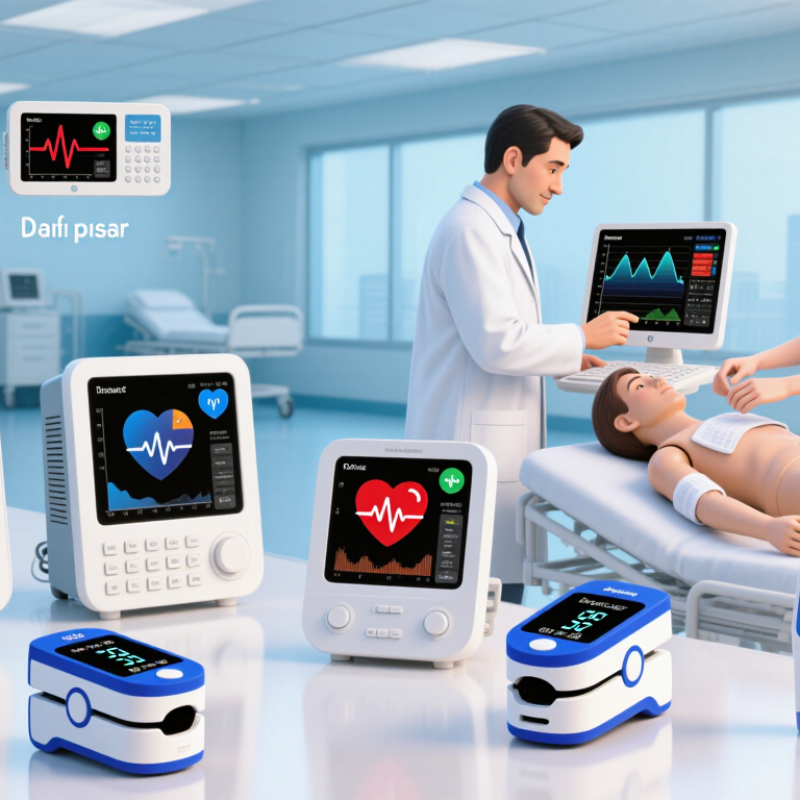
What is the best vitals machine from China? The answer depends on workload, patient flow, and required measurements. Chinese suppliers commonly offer three key models: handheld vital signs devices, compact spot-check monitors, and bedside multiparameter monitors. Handheld units usually measure blood pressure, oxygen saturation, pulse rate, and temperature. They suit clinics, home-care teams, and mobile screening.

Compact spot-check monitors are popular in outpatient departments. They use a wheeled stand, a bright screen, and rechargeable batteries. Indicative 2024–2025 supplier quotations often place these units between 300 and 900 US dollars. Bedside multiparameter monitors cost more, commonly from 800 to 2,500 dollars, depending on ECG, respiratory rate, touchscreen controls, and data connectivity. Prices vary with certification, accessories, order volume, and after-sales support. These figures are market references, not fixed quotations.

From practical evaluation, blood-pressure repeatability matters more than a crowded display. Check readings against a calibrated reference device, especially after several patients. Confirm adult, pediatric, and neonatal cuffs are available. Review sensor compatibility, alarm settings, battery life, and software language before purchase. Some low-cost models look impressive but lack clear calibration records. That is a real concern. Buyers should also request electrical-safety documents, traceable quality records, warranty terms, and local technical support. A machine may be accurate in a showroom yet inconvenient during a busy ward shift.
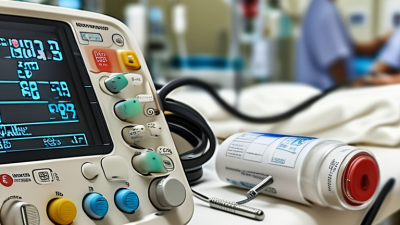
How Chinese Vitals Machines Measure BP, SpO₂, ECG, and Temperature

What Is the Best Vitals Machine from China?

How Chinese Vitals Machines Measure BP, SpO₂, ECG, and Temperature

The best Chinese vitals machine depends on accuracy, workflow, and clinical purpose. A reliable unit should measure several vital signs without creating unnecessary delays. It should also provide clear results, stable software, and simple cleaning procedures. Small details matter.

For blood pressure, an inflatable cuff briefly compresses the upper arm. Sensors detect pressure changes as blood returns through the artery. Correct cuff size is essential. A loose sleeve, crossed legs, or patient movement can distort readings. SpO₂ uses red and infrared light through a fingertip. The sensor estimates oxygen saturation and pulse rate. Cold fingers, nail coatings, and poor circulation may reduce reliability. Staff should wait for a steady waveform, not accept the first number automatically.

ECG measurement records the heart’s electrical signals through skin electrodes. Clean, dry contact helps reduce interference. A patient should remain still and avoid talking during the reading. Temperature measurement may use an infrared forehead sensor, an oral probe, or an axillary probe. Each method has different response times and limitations. Infrared readings are convenient, but sweat or incorrect distance can affect results. In practice, testing should include comparison with a calibrated reference device and routine quality checks. Not every low-cost machine performs consistently. Some interfaces also need better translation and training materials. That weakness deserves attention, even when the numbers look convincing. Final decisions should consider clinical validation, maintenance support, data protection, and professional review.

What Is the Best Vitals Machine from China?

How Vitals Machines Measure BP, SpO₂, ECG, and Temperature

This illustrative resting-adult sample shows how a multi-parameter vital signs machine can display different measurements at the same time. Blood pressure is measured intermittently with an inflatable cuff, SpO₂ uses optical pulse oximetry, ECG records the heart’s electrical activity in millivolts, and temperature is measured using a thermal sensor. The values shown are realistic examples for demonstration and are not intended for diagnosis.

Blood Pressure Accuracy: The AAMI/ISO Target of ±5 mmHg and SD ≤8 mmHg

When asking, “What Is the Best Vitals Machine from China?”, start with blood pressure evidence, not appearance. A reliable device should show independent validation against a calibrated reference method. Under the AAMI/ISO target, the mean difference should stay within ±5 mmHg, with standard deviation at or below 8 mmHg. These figures describe agreement across tested readings. They do not mean every reading will be exactly five mmHg away. That distinction is easy to miss.

Look for a complete validation report, including participant numbers, age ranges, arm sizes, and testing conditions. The report should identify the cuff sizes used and explain how measurements were compared. A certificate without testing methods is weak evidence. I would also check whether the tested model matches the model offered for purchase. Similar housings can hide different sensors or algorithms.

In practical use, accuracy depends on more than the monitor. Let the user rest for five minutes, support the back, keep feet flat, and place the cuff on bare skin at heart level. Take two readings, about one minute apart. An incorrect cuff size can distort results. So can talking. During evaluation, compare repeated readings with a clinically trusted reference device under similar conditions. A clear validation trail matters more than a crowded display. Neat interfaces can create false confidence. That deserves careful reflection before procurement.

What Is the Best Vitals Machine from China? - Blood Pressure Accuracy: The AAMI/ISO Target of ±5 mmHg and SD ≤8 mmHg

A practical, brand-neutral evaluation table for selecting a reliable automated vital signs monitor.
Evaluation Dimension Reference Target or Requirement Why It Matters Evidence to Request Priority
Clinical blood pressure accuracy Mean difference within ±5 mmHg and standard deviation (SD) ≤8 mmHg under ISO 81060-2 validation requirements. This is the principal clinical accuracy benchmark for non-invasive automated blood pressure monitors. Complete independent clinical validation report using a validated reference method and an appropriate subject population. Critical
Individual blood pressure agreement At least 73% of paired readings within ±5 mmHg, 87% within ±10 mmHg, and 96% within ±15 mmHg for the ISO 81060-2 comparison criteria. Average accuracy alone can hide individual readings that are clinically far from the reference value. Agreement tables, paired-reading analysis, and Bland–Altman plots from the validation study. Critical
Static pressure accuracy Within ±3 mmHg for the pressure-measurement system, as specified for automated non-invasive sphygmomanometers by IEC 80601-2-30. Confirms that the pressure-sensing and display system is technically calibrated before clinical comparison. Calibration certificate, test protocol, and production quality-control records. Critical
Cuff-size coverage The device should clearly state the supported arm-circumference range and provide correctly sized cuffs for the intended users. An incorrectly sized cuff is a major source of blood pressure error, even when the monitor itself is accurate. Official cuff circumference range, cuff labeling, size chart, and validation details for each supplied cuff. Critical
Patient population in validation The validation sample should represent the intended users, including relevant ranges of age, sex, blood pressure, arm circumference, and clinical conditions. Accuracy demonstrated only in a narrow population may not transfer to general clinical use. Study inclusion criteria, demographic distribution, blood pressure ranges, and subgroup results. High
Repeatability Repeated measurements should show low variation when taken under the same controlled conditions, with the repeatability method clearly documented. Consistent readings improve trend monitoring and reduce uncertainty in clinical decisions. Repeatability test results, measurement interval, device handling procedure, and environmental conditions. High
Pulse-rate measurement The declared pulse-rate range and accuracy must be stated in the device specifications and verified by testing. Pulse rate is commonly displayed with blood pressure, but its accuracy should be assessed separately from blood pressure accuracy. Pulse-rate accuracy specification, test method, operating range, and error limits. High
Motion and irregular-heartbeat handling The monitor should identify measurement conditions that may compromise reliability, such as movement or an irregular pulse pattern. Clear warnings help prevent users from treating an unstable measurement as a confirmed result. User manual, alarm logic, warning symbols, and verification results under specified disturbance conditions. High
Measurement cycle and user guidance The device should provide clear instructions for posture, arm position, rest period, cuff placement, and repeated measurements. Standardized user technique improves measurement quality and reduces avoidable reading differences. User manual, on-screen prompts, quick-start guide, and training materials. High
Quality and regulatory documentation The supplier should provide applicable conformity documentation, risk-management records, production controls, and traceable calibration procedures. Documented quality systems support consistent performance across production batches. Declaration of conformity, applicable test reports, quality certificates, risk-management summary, and batch traceability records. Critical
Environmental operating conditions Operating temperature, humidity, altitude, storage conditions, and battery requirements should be clearly specified. Performance can change when a monitor is used outside its tested environmental range. Technical specification sheet and environmental test results. Medium
Data management and connectivity If data are transmitted or stored, the device should specify memory capacity, export format, time synchronization, and access controls. Reliable records support trend analysis while reducing transcription errors and privacy risks. Connectivity specification, software documentation, data-security information, and interoperability details. Medium
Selection rule: The best device is not determined by the lowest purchase price or the number of displayed parameters. Give priority to an independent ISO 81060-2 clinical validation report, verified cuff compatibility, documented calibration, and evidence that the tested population matches the intended users.

Safety Standards: IEC 60601, ISO 81060-2, and FDA Pulse Oximetry Guidance

Choosing the best vitals machine from China requires more than comparing screen size, sensors, or purchase price. Safety documentation should guide the decision. IEC 60601-1 addresses electrical safety and essential performance, including protection against shock, overheating, and mechanical hazards. For devices used near other equipment, electromagnetic compatibility testing also matters. A machine that restarts during a noisy clinical procedure is not dependable.

Blood pressure performance needs separate attention. ISO 81060-2 evaluates automated non-invasive sphygmomanometers through clinical validation and accuracy requirements. Ask for validation details, tested patient groups, cuff sizes, and operating conditions. A pressure reading can look precise while remaining clinically unsuitable for children, older adults, or patients with irregular rhythms. Small cuffs can also distort results. This is easy to overlook.

Pulse oximetry requires careful review under FDA guidance. Performance should be assessed across oxygen saturation ranges, motion conditions, low perfusion, and different skin pigmentation levels. Check whether the documentation explains sensor placement, expected limitations, and alarm behavior. In practical evaluations, I would compare repeated readings with a reference device and inspect results in bright and dim rooms. One test is not enough. No device is perfect. Even strong paperwork cannot replace staff training, routine calibration, cleaning procedures, and service records. Some suppliers provide impressive certificates but incomplete test reports; that should trigger further questions, not immediate confidence.

How to Choose the Best Chinese Vitals Machine by Accuracy, Features, and Cost

What Is the Best Vitals Machine from China?

The best Chinese vitals machine depends on accuracy, workflow, and ownership cost.

A low purchase price may hide calibration, training, and replacement expenses. MarketsandMarkets valued the global vital signs monitoring market at about USD 7 billion in 2024. Demand is increasing, but product quality remains uneven across suppliers.

Accuracy should come before appearance.

For blood pressure, request clinical validation under ISO 81060-2. For pulse oximetry, check testing aligned with ISO 80601-2-61. Ask for test reports, sample data, and calibration records.

A practical trial matters too. Measure ten patients with different arm sizes and compare readings with a validated reference device.

Some screens look impressive. Their alarms may still be confusing in a busy ward. Check battery duration, cuff sizes, probe durability, data export, and multilingual support. Connectivity is useful, but only when staff can operate it without extra steps.

Tips:

Calculate the total cost over three years. Include accessories, software, calibration, shipping, and service response. Confirm the warranty in writing.

Do not trust a brochure alone. An independent clinical review may reveal weaknesses that factory testing misses.

I would also keep one manual backup device nearby. Even reliable electronics can fail unexpectedly. WHO’s Global Patient Safety Action Plan emphasizes safer measurement and reporting practices, making staff training as important as hardware selection.