China Best Vitals Monitor for Global Buyers?
Can China provide the best vitals monitor for global buyers? The answer depends on evidence, not factory photographs or attractive prices. Chinese manufacturers now offer compact devices that measure blood pressure, pulse rate, oxygen saturation, temperature, and sometimes respiratory rate. A reliable model should perform consistently beside a hospital bed, inside an ambulance, or during a long clinic shift.
Dr. Joseph Kvedar, a recognized digital-health expert, has said, “The best technology is the technology that disappears into the background.” This principle matters when evaluating a vitals monitor. Buttons should remain clear under poor lighting. Readings should appear quickly on a bright screen. Batteries should survive repeated rounds without unexpected shutdowns. Data transfer must also remain stable, especially when nurses depend on wireless records.
However, global buyers should avoid calling one Chinese product “the best” without independent testing. That claim is too simple. Product quality can vary between factories, even within the same market. Buyers should examine ISO 13485 certification, applicable IEC 60601 compliance, clinical validation, calibration records, software security, and local regulatory registration. They should also request sample testing before placing large orders. A device may look impressive in a showroom yet respond slowly on cold fingers or weak patients. That is not a minor detail.
This guide compares practical performance, manufacturing experience, documentation, after-sales support, and total ownership cost. It also considers uncomfortable gaps, including language barriers and inconsistent technical support. China has strong potential. Still, careful verification remains essential for every global buyer.
What Is a Vital Signs Monitor and Why Does China Matter?
China Best Vitals Monitor for Global Buyers?
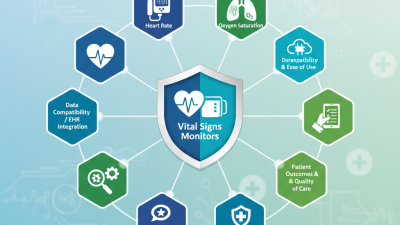
A vital signs monitor measures the body’s most immediate signals. These usually include blood pressure, pulse rate, oxygen saturation, temperature, and respiration rate. In a clinic, the device may sit beside a patient’s bed. Its screen shows changing numbers, alarms, and measurement trends. These details support faster decisions, but they do not replace clinical judgment.
The need is substantial. The World Health Organization’s 2023 Global Report on Hypertension estimates that 1.28 billion adults aged 30–79 live with hypertension worldwide. Nearly 46% are unaware of their condition. Reliable monitoring can help identify risk earlier. China also matters because its healthcare demand is large and diverse. China’s National Bureau of Statistics reported 296.97 million people aged 60 or above in 2023, representing 21.1% of the population. Home care, hospitals, and community clinics need different designs.
Manufacturing scale is useful, but price alone proves little. Buyers should examine measurement accuracy, sensor compatibility, alarm performance, battery life, and cleaning resistance. Check ISO 13485 certification, IEC 60601 safety testing, ISO 14971 risk management, and market-specific registration documents. A lower quote is not proof of value. In practice, after-sales training and replacement parts may matter more than a bright display. The difficult question remains: will the monitor perform consistently after months of daily use? A sample test may not reveal that weakness. Rescue plans are still necessary.
China Best Vitals Monitor for Global Buyers? What Is a Vital Signs Monitor and Why Does China Matter?
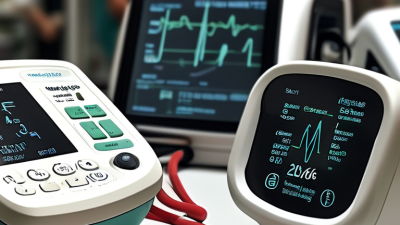
A vital signs monitor measures key physiological indicators such as ECG, heart rate, oxygen saturation, and respiration. The chart below shows an illustrative 10-second resting-adult waveform: approximately 75 beats per minute, 97% oxygen saturation, and 15 breaths per minute.
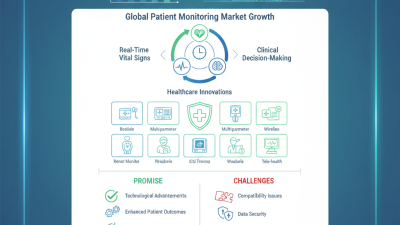
For global buyers evaluating monitors manufactured in China, important specifications include measurement accuracy, sensor compatibility, alarm performance, data connectivity, regulatory documentation, and suitability for the intended clinical environment.
Which Features Define the Best Vital Signs Monitor for Global Buyers?
For global buyers, the best vital signs monitor is not the one with the longest feature list. It is the one that delivers dependable readings in real clinical conditions.
The WHO Patient Safety Fact Sheet reports that about one in ten patients experiences harm during healthcare. That makes measurement quality more than a purchasing detail. Buyers should review validation evidence for blood pressure, oxygen saturation, temperature, and pulse rate. ISO 81060-2 and ISO 80601-2-61 offer useful reference points. Ask for patient ranges, test conditions, and error margins. Not just marketing claims.
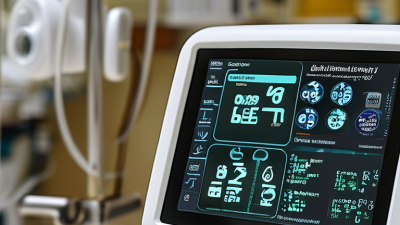
Practical design matters equally. A clear screen should remain readable under bright ward lights and during dim transport. Audible alarms need adjustable limits, silence controls, and visible status indicators. Poor alarm design may contribute to alarm fatigue. Battery life should cover a full shift, with charging protection and replaceable options for areas with limited service access. Secure data export is also important. Documented interfaces can reduce manual transcription and support cleaner records. Cybersecurity should include access controls, software updates, and event logs.
When evaluating monitors made in China, global buyers should inspect after-sales reliability. Request multilingual instructions, calibration support, spare sensors, and written response times. The WHO Global Patient Safety Action Plan 2021–2030 stresses safer measurement, learning, and system accountability. I would still test the device with gloved hands and a moving patient. Laboratory accuracy can fail beside the bed. No monitor is perfect. That uncomfortable detail deserves attention.
How Do Chinese Vital Signs Monitor Manufacturers Compare?
Chinese vital signs monitor manufacturers have become serious options for global buyers. Their strengths often include broad production capacity, competitive pricing, and fast model customization. Many factories combine electronic assembly, sensor testing, and final inspection under one roof. This can shorten communication between engineering and production teams. In practical evaluations, buyers should examine blood pressure consistency, SpO2 accuracy, temperature response, and screen readability. A polished sample is not enough. Ask for repeated test records from different batches.
Compared with manufacturers in mature medical-device markets, Chinese suppliers may offer greater flexibility in enclosure design, software languages, and order quantities. However, quality systems differ widely between factories. Some provide clear traceability, calibration procedures, and risk-management files. Others rely heavily on visual inspection. That gap matters in hospitals, ambulances, and home-care settings. Request recognized certifications, test methods, warranty terms, and service response times. Verify documents independently when possible. Experience has taught buyers that a low quote can hide training, spare-part, or validation costs. The comparison is not simply East versus West.
Tips: Build a small comparison table before negotiating. Record accuracy claims, sample results, production lead time, minimum order quantity, software support, and replacement-part availability. Ask for a live demonstration using several users or reference devices. Check alarms in a noisy room. Check readings after movement. Also ask how failures are investigated. A dependable manufacturer should explain corrective actions without vague promises. No supplier is perfect. Even a strong factory may miss a shipment detail or need clearer instructions. Keep acceptance criteria written and measurable.
What Certifications and Standards Should International Buyers Check?
For global buyers comparing China-made vital signs monitors, certification should be checked before price. The WHO Global Patient Safety Action Plan reports that about one in ten patients experiences harm during healthcare, with over half considered preventable. A faulty reading can therefore create serious clinical risk.
Request the manufacturer’s ISO 13485 certificate, and verify its scope, site address, expiry date, and issuing body. The ISO Survey 2022 recorded more than 31,000 ISO 13485 certificates worldwide, but a certificate alone proves limited control. Check test reports for IEC 60601-1 electrical safety and IEC 60601-1-2 electromagnetic compatibility. For pulse oximetry, look for ISO 80601-2-61 testing; for non-invasive blood pressure, check ISO 81060-2. These reports should identify the exact model and software version.
For European sales, confirm EU MDR 2017/745 compliance, technical documentation, clinical evaluation, and the appropriate notified-body certificate. For the United States, verify whether a valid FDA 510(k) applies to the intended model and configuration. Ask for ISO 14971 risk-management records and IEC 62366 usability evidence. Small details matter. Observe alarm volume, probe fit, screen readability, and battery behavior during testing. I would also request raw accuracy data, not only polished brochures. Some suppliers provide incomplete files. That is a warning, though not always proof of poor quality.