7 Tips for Choosing Remote Patient Monitoring Devices
Remote patient monitoring devices have moved from pilot projects into everyday care. A blood pressure cuff on a kitchen table or a pulse oximeter beside a patient’s bed can send clinicians useful readings between visits. But a device is only as useful as its accuracy, usability, and fit with a clinical workflow. Small details matter. Can a patient with arthritis operate its buttons? Does it connect reliably when home Wi-Fi drops?
The market is expanding quickly. Grand View Research estimated the global remote patient monitoring market at $14.0 billion in 2023, with projected growth to $56.9 billion by 2030. McKinsey’s 2021 analysis found that virtual-care use remained about 38 times above pre-pandemic levels. That figure describes virtual care broadly, not device adoption alone. It signals momentum, not proof that every monitoring program works. Growth can make careful selection more important, not less.
Digital-health expert Dr. Eric Topol wrote, “The future of medicine is the patient.” His point fits remote monitoring: patients need tools they can use, understand, and trust. The right choice also depends on measurement quality, data security, clinician alerts, integration, support, and total cost. A polished dashboard cannot fix poor readings or an ignored alert. Nor does a higher price guarantee better care. These choices involve trade-offs, and the evidence may not answer every practical question. The seven tips below offer a grounded way to compare devices before committing.
Set Clinical Priorities: CDC Data Show Hypertension Affects 47.7% of U.S. Adults
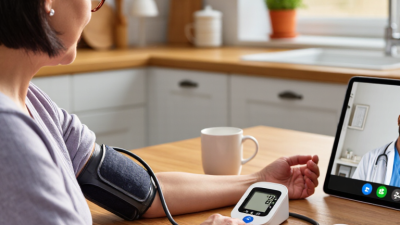
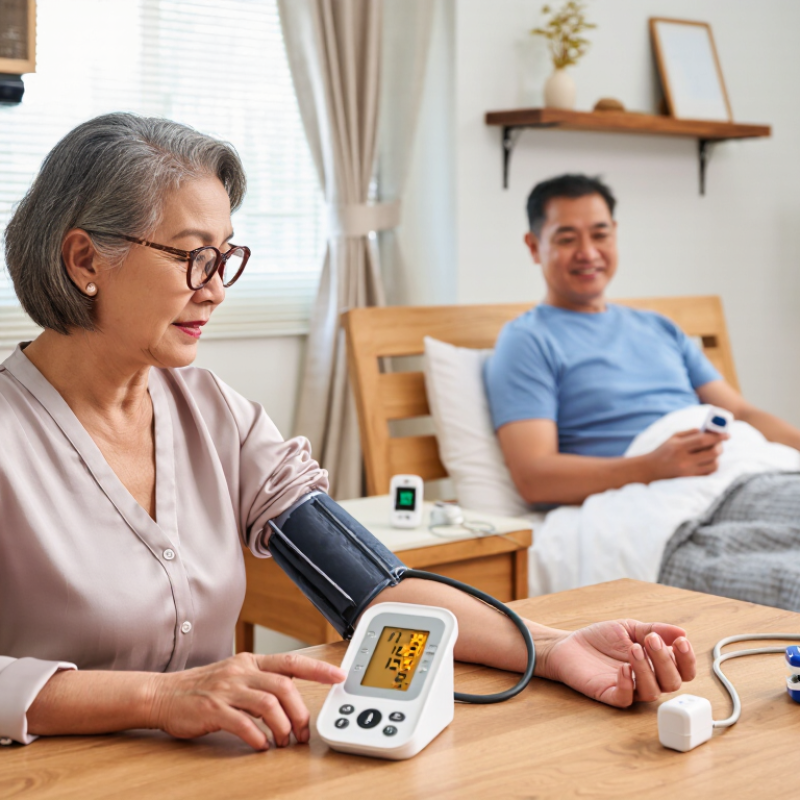
CDC data show that hypertension affects 47.7% of U.S. adults, making blood pressure a practical priority for remote monitoring. A reading taken at home can help clinicians track changes between appointments, but only when the measurement is dependable. Small details matter. A cuff that is too small, a measurement taken over clothing, or a rushed reading can distort the result.
When choosing a device, check that its measurement method has been clinically validated and that the cuff fits the patient’s upper arm. Look for clear instructions, readable results, and a way to share measurements securely with the care team. Connectivity matters, too, but a device that pairs with a phone may still be difficult for someone with limited data access or low confidence using apps. That gap deserves attention.
Set a realistic measurement schedule with the clinician, such as taking readings at consistent times after sitting quietly for five minutes. Patients should know what to do when readings are unusually high, rather than relying on a device alone to interpret them. A brief log can include the number, time, and any relevant context, such as a missed dose or a stressful morning. Home readings are useful evidence, not a substitute for clinical assessment. Even a well-chosen monitor cannot fix an unclear follow-up plan.
Match Devices to Medicare CPT 99454’s 16-Day Data Requirement
For Medicare remote patient monitoring, CPT 99454 generally requires device data on at least 16 days within a 30-day period. The days do not have to be consecutive. Choose a device that can capture the measurements your care team needs and transmit them reliably. A reading sitting on a patient’s phone may not be enough if it never reaches the clinical system.
Check the practical details before selecting a device. Does it measure the right vital sign? Can patients use it without struggling with small buttons or confusing setup steps? Ask how readings are transmitted, what happens when Wi-Fi drops, and whether missed data can be spotted promptly. Easy to miss. A battery warning or an unpaired sensor can quietly interrupt a month of useful readings.
Build the 16-day threshold into your workflow, not just your device checklist. Staff can review incoming data and contact patients when readings stop, while documenting relevant activity and troubleshooting. The device itself does not guarantee billing eligibility; coverage, documentation, and payer rules still matter. Confirm current Medicare guidance and applicable requirements before relying on a particular setup. And be honest about fit: a technically capable monitor may still fail if a patient finds it uncomfortable or hard to use.
7 Tips for Choosing Remote Patient Monitoring Devices
Match devices to CPT 99454’s 16-day data requirement
This illustrative example shows 16 qualifying data days recorded during a 30-day period. When selecting a device, consider reliable data capture, patient usability, connectivity, and clear reporting so qualifying days can be documented. CPT 99454 requirements and coverage rules apply; verify current guidance and payer policies.
Check FDA Status and Clinical Validation for Each Measurement Type
Before selecting a remote patient monitoring device, verify its FDA status for the exact model and measurement type. Search FDA records for the relevant clearance, authorization, or approval; registration or listing alone does not mean FDA has reviewed a device’s performance. Check whether the intended use matches your patients and setting. A fingertip oxygen sensor, for example, should not be judged by evidence for a different sensor or population. Check the fine print.
Clinical validation should also match the measurement. For automated blood pressure cuffs, the AAMI/ESH/ISO standard uses a protocol involving at least 85 participants and 255 paired readings. Look for published results under that protocol, not a general claim that a device is “clinically tested.”
Pulse oximeters need scrutiny too. A 2020 New England Journal of Medicine study found occult hypoxemia in 11.7% of Black patients versus 3.6% of White patients in one cohort, despite reassuring oxygen readings. That matters. Ask whether testing included varied skin tones, and whether accuracy was assessed at low oxygen levels.
For glucose, temperature, or weight, seek validation against an accepted reference method and across realistic home-use conditions. Evidence can be incomplete; note what was not tested before relying on readings for care decisions.
Confirm EHR Interoperability, Connectivity, and HIPAA Safeguards
Tip 1: Confirm that each device can send readings into the clinic’s EHR, not merely display them in a separate portal. Ask for a live test using a blood pressure reading, including its units, timestamp, and patient identifier. ONC’s 2023 hospital data found that 70% of hospitals routinely engaged in all four interoperability domains: sending, receiving, finding, and integrating information. That leaves a real-world gap to check.
Tip 2: Test connectivity in the places patients will actually use devices: bedrooms, rural homes, and areas with weak Wi-Fi. Confirm whether readings queue safely during an outage and upload when service returns. Test it offline. Then reconnect. A status light can look reassuring while data never reaches the care team, so verify receipt in the EHR.
Tip 3: Request clear documentation of encryption, access controls, audit logs, and breach response. Ask how staff accounts are protected and how long device data remains stored. HHS’s Office for Civil Rights reported 725 large healthcare data breaches in 2023, affecting more than 133 million people. The device alone does not guarantee HIPAA compliance; review the full data path, including connected services and business associate agreements. One uncomfortable question matters: who can see a patient’s readings, and why?
Compare Patient Usability, Support, and Total Cost of Ownership
Choosing remote patient monitoring devices is not only a feature comparison. A device that looks simple in a catalog may frustrate someone with stiff fingers or poor eyesight. Let patients try the cuff, scale, or sensor they would use at home. Can they read the screen beside a dim kitchen window? Can they connect it without help? Small tests matter.
Consider daily routines, too. A weight check may suit one patient and feel intrusive to another. Clear instructions, comfortable fit, readable displays, and fewer charging steps can make regular use easier. But usability varies. A caregiver’s experience may not reflect the patient’s. Ask both.
Support and total cost deserve equal scrutiny. Ask who answers technical questions, when help is available, and how quickly a faulty device can be replaced. Clarify whether onboarding covers patients and clinical staff. Then itemize device, connectivity, software, integration, training, shipping, and replacement costs. Staff time counts. A low purchase price can hide recurring expenses. Estimates can still miss costs when patients stop participating or need extra assistance. A small pilot may reveal issues, though its results may not predict every household’s experience.