Choosing the right telemonitoring devices is no longer a simple matter of comparing screen size, price, or wireless features. Global buyers must examine clinical accuracy, data security, connectivity, maintenance, and user comfort. A blood pressure monitor may perform well in a city hospital but struggle in a rural clinic with unstable internet. A wearable sensor may collect continuous data, yet become useless if patients find it uncomfortable.
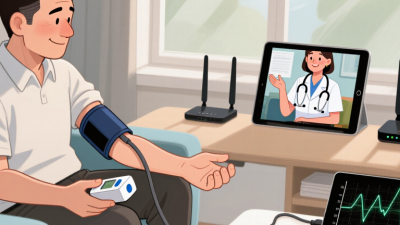
Dr. Joseph Kvedar, a leading telehealth researcher and former president of the American Telemedicine Association, has said, “The future of health care is in the home.” His observation reflects a major shift in healthcare delivery. Patients now measure blood pressure, glucose, oxygen saturation, temperature, and heart rate outside traditional facilities. However, home-based monitoring still depends on thoughtful device selection, reliable training, and professional interpretation.
This guide reviews the Top 10 Telemonitoring Devices for Global Buyers. It considers practical performance, measurement consistency, integration options, battery life, technical support, and suitability across different healthcare environments. Some devices appear advanced but offer limited value without compatible software or dependable connectivity. That matters.
The ranking is not absolute. Regional regulations, reimbursement policies, language support, and local infrastructure can change a device’s real-world usefulness. Buyers should verify current certifications and clinical documentation before purchasing. Even experienced teams can overlook small details, such as cuff size, charging time, or unclear patient instructions. Those details often decide whether telemonitoring succeeds.
Top 10 Telemonitoring Devices for Global Buyers
Telemonitoring devices collect patient data outside hospitals and send it to clinicians remotely. Unlike basic fitness trackers, clinical devices support diagnosis, treatment, or follow-up decisions. Common categories include blood pressure cuffs, pulse oximeters, ECG patches, glucose meters, weight scales, thermometers, spirometers, fetal monitors, wearable sensors, and connected hubs. The World Health Organization’s Global Strategy on Digital Health 2020–2025 reports that 129 countries have established national digital health strategies. That signals strong policy support. Still, adoption is uneven.
Core technologies matter.
Bluetooth transfers readings from a device to a phone or home gateway. Cellular connectivity helps patients without stable broadband. Cloud platforms store time-stamped records for authorized clinical teams. Algorithms can flag rising pressure, irregular heart rhythm, or falling oxygen levels. However, an alert is not a diagnosis. Poor sensor placement, cold fingers, motion, and missed measurements can distort results. The OECD’s Health at a Glance 2023 reports that teleconsultations represented about 14% of doctor consultations across surveyed OECD countries in 2021.
Global buyers should examine accuracy, interoperability, cybersecurity, battery life, and local regulatory status. A device must fit real routines. An older patient may understand a large screen better than a mobile application. Clinical validation should match the intended population and disease. The boundary between wellness and medical monitoring is not perfectly clean. A technically accurate device can still fail when instructions are confusing. Procurement teams should request validation evidence, data-export standards, service support, and replacement plans before purchasing.

The chart compares ten common telemonitoring device categories by the number of primary physiological outputs they commonly collect. The values represent typical measurement outputs rather than market share or a ranking of manufacturers. Telemonitoring systems commonly use Bluetooth, cellular, Wi-Fi, cloud platforms, mobile applications, and secure clinical dashboards to transmit data for remote care.
Evaluating telemonitoring devices for global deployment starts with the patient and the setting. A blood-pressure monitor used in a city clinic faces different demands from one used in a rural home with unstable power. Check measurement accuracy against recognized clinical standards, then review validation evidence for the intended patient group. Confirm that cuffs, sensors, and replacement parts are available locally. Small details matter.
Connectivity needs equal scrutiny. The GSMA’s Mobile Economy 2024 report estimated that 4.6 billion people used mobile internet in 2023, about 57% of the global population. That still leaves many patients with limited or unreliable access. Test offline recording, delayed uploads, battery life, and compatibility with local phones and health-record systems. Ask how data are encrypted, stored, and accessed, and whether staff can export records in practical formats. A polished dashboard is not enough.
Tips: Run a small field pilot before purchasing at scale. Test devices in real homes, including weak-signal areas. Measure setup time, missing readings, and support requests. Train users with short, translated instructions and clear diagrams. Check calibration procedures and the cost of consumables. Be honest about trade-offs: a feature-rich device may be harder to maintain, and a low-cost model may need more staff support. The right choice depends on local workflows, not specifications alone.
Top 10 Telemonitoring Devices: Features and Clinical Applications
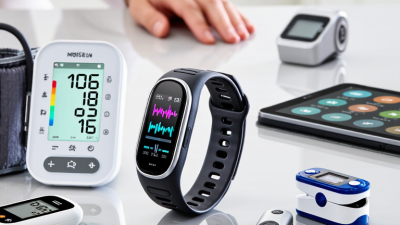
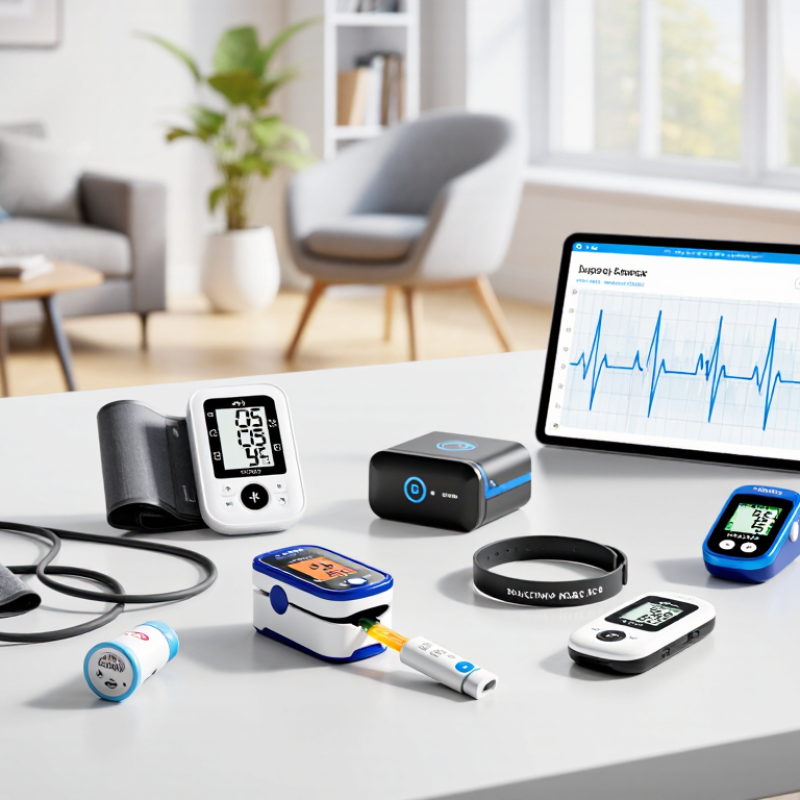
Telemonitoring devices bring clinical observations into homes, clinics, and mobile care units. A reliable selection should match the disease, patient skills, and care pathway. The top ten categories include digital blood pressure monitors, pulse oximeters, glucose meters, digital thermometers, portable ECG devices, wearable heart monitors, spirometers, weight scales, fetal monitors, and multiparameter gateways.
Digital blood pressure monitors support hypertension management with scheduled readings and irregular-heartbeat alerts. Pulse oximeters help assess oxygen changes in respiratory disease, although cold fingers can reduce accuracy. Glucose meters guide diabetes treatment through frequent testing and shared reports.
Portable ECG devices record rhythm symptoms that may disappear before a clinic visit. Wearable heart monitors extend observation during daily activity.
Spirometers support asthma and chronic lung disease reviews by measuring airflow. Connected weight scales can reveal fluid retention in heart failure patients. Fetal monitors assist selected antenatal assessments under professional supervision. Digital thermometers track infection-related temperature changes. Multiparameter gateways combine readings for remote nursing review. Useful, but not flawless.
Tips: Confirm device validation, sensor placement, battery life, data encryption, and local clinical requirements. Train users with a real demonstration. Ask patients to repeat unusual readings. A single number can mislead.
Clinical teams should define alert thresholds before deployment. They also need a response plan for missed readings and urgent changes. Experience shows that simple interfaces improve adherence, but assumptions about digital literacy can fail. Review data quality regularly, document clinical decisions, and keep face-to-face assessment available when remote measurements seem incomplete.
For global buyers, a telemonitoring device is only useful when its readings reach the care team reliably. A blood pressure cuff may connect through Wi-Fi, cellular service, or a paired phone. Each route behaves differently in rural clinics, apartment blocks, and areas with intermittent power. Test the complete path, including setup time and what happens when a signal drops. Small details matter.
Interoperability deserves equal scrutiny. Ask whether measurements can be exported in standard, documented formats, and whether timestamps, units, and patient identifiers remain consistent. A pulse reading labeled in one unit can be misread downstream. Integration should be tested with existing records and workflows, not just a product demonstration. No interface is effortless. Staff may still need to correct incomplete records or teach patients how to position a sensor.
Security is operational, too. Check encryption in transit and at rest, role-based access, audit logs, and the device provider’s patch process. Ask where data is stored, who can access it, and how long it is retained. Regional and institutional requirements differ, so local clinical, privacy, and IT teams should review deployment plans. That takes time. A polished dashboard cannot compensate for unclear incident procedures or weak account controls.
| Rank | Device Type | Typical Measurements | Common Connectivity | Interoperability Considerations | Data Security and Cross-Market Notes |
|---|---|---|---|---|---|
| 1 | Blood pressure monitor | Systolic and diastolic pressure; pulse rate | Bluetooth; some models also use Wi-Fi or a cellular gateway | Confirm units, timestamp handling, patient identification, and availability of a documented API or health-data export. Bluetooth support alone does not ensure clinical-system compatibility. | Use encrypted transmission, authenticated pairing, and controlled account access. Cuff sizing, validated measurement protocols, local device approval, and regional connectivity affect deployment. |
| 2 | Body weight scale | Body weight; some models estimate additional body-composition measures | Bluetooth or Wi-Fi; data may pass through a mobile app or hub | Check how the system distinguishes household members and exports dated readings. Body-composition estimates are not interchangeable with clinical measurements. | Protect shared-device profiles and cloud accounts. Units, load limits, calibration, mains power, and local radio requirements should be checked for each market. |
| 3 | Pulse oximeter | Peripheral oxygen saturation (SpO₂); pulse rate | Bluetooth; some systems use a connected phone or gateway | Integration should preserve measurement time, signal-quality indicators where available, and device context. Confirm the intended clinical use and applicable regulatory status. | Secure pairing and encrypted app-to-server transfer are important. Performance can be affected by motion, circulation, fit, and other factors; local labeling and validation requirements vary. |
| 4 | Connected thermometer | Body temperature, with measurement site and method affecting interpretation | Bluetooth; some models sync through a mobile application | Retain the measurement method, unit, timestamp, and any conversion information. Celsius and Fahrenheit support should be verified for the intended users. | Limit data sharing to necessary users and services. Measurement method, local accuracy standards, labeling, and device registration rules may differ by market. |
| 5 | Single- or multi-lead ECG monitor | Electrocardiogram waveform and derived heart-rate or rhythm information | Bluetooth or Wi-Fi; recordings may be uploaded through an app | Waveform format, sampling details, lead configuration, annotations, and export rights should be confirmed before integration. A PDF report may not provide machine-readable data. | Apply encryption, role-based access, audit logging, and clear retention policies. Intended use and regulatory classification vary; automated interpretations require appropriate clinical oversight. |
| 6 | Continuous glucose monitor (CGM) | Interstitial glucose readings, trends, and alerts | Short-range radio to a reader or phone; some systems support remote sharing through the internet | Check data access, export formats, update frequency, time-zone handling, and compatibility with the intended care platform. Remote sharing may depend on a phone and internet connection. | Protect account credentials and shared-caregiver access. Sensor availability, approved indications, mobile compatibility, and data-hosting requirements differ across countries. |
| 7 | Peak-flow meter or spirometer | Peak expiratory flow; spirometers may record measures such as FEV₁ and FVC | Bluetooth or USB; some systems use an app for transmission | Confirm units, test quality indicators, repeat-test handling, and export of raw or summary results. Reference values and interpretation depend on factors including age, height, and clinical context. | Use secure transfer and patient-level access controls. Calibration, hygiene, consumables, local clinical standards, and medical-device requirements should be evaluated. |
| 8 | Wearable ECG or cardiac patch | Continuous or intermittent ECG; some devices also record activity or heart rate | Bluetooth to a phone or relay; cellular connectivity may be provided by a separate gateway | Assess waveform availability, event markers, recording duration, and data completeness during connectivity loss. Confirm how alerts are reviewed and routed to care teams. | Continuous records are sensitive health data; define access, retention, and breach-response procedures. Wear time, skin-contact materials, approvals, and service coverage vary by market. |
| 9 | Home sleep-apnea testing device | Depending on configuration: airflow, respiratory effort, oxygen saturation, pulse, or body position | Typically stores a study for later upload; some systems use Bluetooth or a wired data connection | Confirm sensor channels, recording duration, raw-data access, and report formats. Results require appropriate clinical interpretation and are not equivalent across different test configurations. | Secure stored recordings and transfer links. Device supply, professional review pathways, language support, and local diagnostic regulations should be considered. |
| 10 | Connected fetal monitor | Fetal heart rate and, depending on configuration, uterine activity | Often uses a local monitor or gateway; remote transfer may use Wi-Fi or cellular networks | Verify signal and event metadata, patient matching, report access, and integration with the receiving clinical workflow. Remote monitoring does not replace required clinical assessment. | Use strong access controls and secure transfer for maternal and fetal health data. Clinical indications, operator requirements, connectivity coverage, and approval pathways vary by jurisdiction. |
Note: This comparison covers device categories, not specific commercial products. Connectivity, standards support, security controls, regulatory status, and available integrations vary by model and market. Buyers should verify technical documentation, data-export terms, local approvals, privacy obligations, and clinical suitability before procurement.
When comparing ten telemonitoring devices, global buyers should assess more than sensor accuracy. Procurement teams need documented clinical validation, device classification, cybersecurity controls, and regional registration requirements. The WHO Global Status Report on Digital Health 2022 reported that about 70% of countries had a national digital health strategy. Yet implementation remains uneven. A device approved in one market may require additional evidence elsewhere.
Interoperability deserves close attention. Buyers should request API documentation, standard data formats, offline operation, and clear ownership of patient data. OECD Health at a Glance 2023 reported average health spending of 9.2% of GDP across OECD countries in 2022. This pressure makes total cost important. Include subscriptions, replacement sensors, calibration, customs handling, training, and technical integration. The cheapest quotation can become expensive after deployment.
Compliance files should reference relevant quality systems, electrical safety testing, software lifecycle controls, and local privacy obligations. Support contracts need measurable response times, multilingual assistance, spare-part availability, and secure software updates. Ask how alerts are handled during network outages. A dashboard may look impressive, but poor connectivity can undermine clinical use. We have seen procurement plans focus heavily on specifications and too little on field support. That is a useful warning. Buyers should also test packaging, charging, cleaning, and patient instructions with real users before signing a global agreement.
©2026Infinium Medical
Adding {{itemName}} to cart
Added {{itemName}} to cart