2026 Best Medical Instruments for Global Buyers?

The 2026 medical instruments market will reward buyers who measure performance beyond the purchase price. Hospitals need dependable devices, not attractive brochures. A monitor may look affordable, yet its service contract, calibration schedule, software updates, and replacement sensors can reshape the final cost.

Industry data shows why careful selection matters. MedTech Europe’s 2024 industry report estimated Europe’s medical technology market at approximately €170 billion in 2023. It also reported around 37,000 companies and 930,000 employees. Fortune Business Insights estimated the global medical devices market at over US$500 billion, while projecting continued growth through 2032. These figures differ because market definitions differ. That uncertainty deserves attention. A sales forecast is not a clinical guarantee.

The World Health Organization states that medical devices are essential for “the prevention, diagnosis, treatment and rehabilitation of illness and disease,” according to its Global Atlas of Medical Devices. Dr. Tedros Adhanom Ghebreyesus, WHO Director-General, has repeatedly emphasized that access must include safe, suitable, and quality-assured technologies. This principle should guide global buyers in 2026.

Look closely at the details. Request ISO 13485 certification, regulatory documentation, electrical safety testing, and traceable calibration records. Confirm local technical support before shipment. Ask who repairs a failed infusion pump on a Friday night. That question can expose weak procurement decisions.

This guide compares practical medical instruments for hospitals, laboratories, clinics, and distributors. It considers accuracy, usability, maintenance, training, cybersecurity, and total ownership cost. No ranking is perfect. Real-world performance depends on staff, infrastructure, and honest after-sales support.

2026 Best Medical Instruments for Global Buyers?

Medical Instruments: Definition, Scope, and Classification

2026 Best Medical Instruments for Global Buyers?

Medical Instruments: Definition, Scope, and Classification

Medical instruments are tools, devices, software, or systems used to diagnose, monitor, prevent, treat, or support human health. Their scope extends beyond hospital machines. It includes surgical tools, imaging equipment, patient monitors, laboratory analyzers, rehabilitation aids, and in vitro diagnostic products. According to the World Health Organization’s Global Atlas of Medical Devices, more than two million medical device types exist worldwide. They are grouped into over 7,000 generic categories. The boundary is not always tidy.

Classification helps buyers compare risk, intended use, and compliance duties. Many regulators classify products by potential harm and invasiveness. In the United States, devices generally fall into Class I, II, or III. Higher classes require stronger evidence and tighter controls. European rules use Classes I, IIa, IIb, and III, while software and diagnostic products may follow separate pathways. A classification cannot be copied blindly across markets.

A practical buyer should check the product’s intended purpose, user group, measurement accuracy, sterilization method, and service conditions. A bedside monitor needs reliable alarms, clear displays, and stable power protection. A laboratory analyzer needs validated results and controlled calibration. Grand View Research estimated the global medical devices market at more than USD 500 billion in 2023. Market size alone proves little. Procurement records, clinical evidence, quality certificates, and post-sale support matter more. A catalog can still mislead. Always verify the current rules with qualified regulatory professionals and official authorities.

Key Selection Criteria for Global Medical Instrument Buyers

2026 Best Medical Instruments for Global Buyers?

Key Selection Criteria for Global Medical Instrument Buyers

Global buyers should begin with clinical purpose, not catalog popularity. Define the patient group, procedure, operating environment, and expected daily workload. A device for a rural clinic may need battery operation, dust protection, and simple controls. A tertiary hospital may prioritize connectivity, automation, and advanced data reporting.

Evidence matters. Request clinical validation, performance data, calibration records, and clear instructions for use. Check whether the instrument meets recognized quality and safety standards. Confirm local registration requirements before purchase, because approval pathways differ between markets. Independent testing can reveal weaknesses that sales materials do not show.

Look beyond the purchase price. Ask about consumables, spare parts, software updates, service response, and operator training. A reliable supplier should provide traceable documentation and realistic maintenance schedules. Cybersecurity deserves attention when instruments connect to hospital networks. Can users control access and protect patient data?

Test the workflow.

A short demonstration may expose confusing menus, slow results, or fragile accessories. Speak with clinicians who use similar equipment daily. Their practical experience often outweighs polished specifications. Still, user opinions can be incomplete. Compare them with published evidence and verified technical documents.

Temperature, humidity, voltage, and transport conditions also affect performance. Packaging should protect sensitive components during long international shipments. Language support is useful, but accurate translation is essential for safe operation. No checklist is perfect. Buyers should document assumptions and revisit them after installation, because real clinical conditions often challenge the original plan.

2026 Best Medical Instruments for Global Buyers

Key Selection Criteria for Global Medical Instrument Buyers

The chart presents an indicative 100-point evaluation model for international procurement. Regulatory compliance, clinical performance, total cost of ownership, service support, interoperability, supply continuity, and cybersecurity are widely used considerations when comparing medical instruments across markets. Actual weighting should be adapted to the device class, intended use, and destination-country requirements.

Reference framework: common considerations reflected in WHO medical-device procurement guidance, ISO 13485 quality-management principles, and IEC 60601 safety requirements.

Top Medical Instrument Categories for 2026

Top Medical Instrument Categories for 2026

Global buyers are prioritizing medical instruments that improve accuracy, workflow, and patient safety. Diagnostic imaging remains central, including ultrasound, digital radiography, and compact imaging systems. Patient monitoring equipment is also expanding, especially bedside monitors for oxygen levels, blood pressure, and heart rhythm. These devices support faster decisions in emergency rooms, clinics, and mobile care settings.

Laboratory diagnostic instruments deserve close attention. Automated analyzers, centrifuges, and point-of-care testing systems can shorten waiting times. However, speed should not replace verification. Buyers should review calibration records, testing methods, maintenance schedules, and operator training. Surgical instruments also remain essential, from electrosurgical units to sterilization equipment and precision tools. Reliable after-sales service matters when a small fault can delay a procedure.

Rehabilitation and home-care instruments are gaining importance in 2026. Portable physiotherapy devices, mobility aids, and remote monitoring tools can support long-term recovery. Connectivity is useful, but it creates data security and interoperability concerns. Buyers should confirm local regulatory clearance, electrical safety documentation, warranty terms, and spare-parts availability before purchasing. Artificial intelligence may improve image analysis, yet clinical judgment remains necessary. It is not a complete solution. Some product comparisons still rely on limited field data, so procurement teams should request demonstrations and independent performance evidence.

2026 Best Medical Instruments for Global Buyers? - Top Medical Instrument Categories for 2026

A practical comparison of high-priority medical instrument categories for hospitals, clinics, laboratories, emergency services, and community healthcare programs.

Priority Medical Instrument Category Primary Clinical Use Typical Healthcare Settings Core Functions and Measurable Parameters Key 2026 Procurement Drivers Important Compliance and Technical References Recommended Purchasing Criteria Indicative Demand Outlook
1 Multiparameter Patient Monitors Continuous observation of patient vital signs and physiological status. Emergency departments, intensive care units, operating rooms, ambulances, and inpatient wards. ECG, heart rate, non-invasive blood pressure, SpO2, respiratory rate, temperature, and optional invasive pressure or capnography. Higher demand for central monitoring, alarm management, battery operation, connectivity, and flexible configurations for different acuity levels. IEC 60601-1 for general electrical safety; IEC 60601-1-2 for electromagnetic compatibility; relevant particular standards apply to individual functions. Check alarm customization, display readability, sensor compatibility, battery runtime, data export, network security, and availability of consumables. Very High
2 Diagnostic Ultrasound Systems Non-ionizing imaging for obstetrics, cardiology, abdominal studies, vascular examinations, and point-of-care assessment. Hospitals, diagnostic centers, maternity units, emergency departments, and mobile clinics. 2D imaging, color Doppler, spectral Doppler, M-mode, measurement packages, and optional 3D/4D imaging. Demand for portable point-of-care systems, lower operating costs than many advanced imaging modalities, and wider use in underserved or remote locations. IEC 60601-1 and IEC 60601-1-2; probe-specific safety and acoustic-output requirements should be verified according to the intended application. Evaluate image quality, probe range, preset customization, depth and frequency range, battery performance, DICOM support, and service availability. Very High
3 Electrocardiographs and ECG Recorders Recording and analysis of the heart’s electrical activity for rhythm and cardiac evaluation. Primary-care clinics, cardiology departments, emergency rooms, occupational health services, and ambulances. Usually 12-lead ECG recording, heart rate calculation, rhythm display, paper or electronic reports, and optional arrhythmia analysis. Growing screening requirements, preventive cardiology programs, digital records, and demand for compact devices with fast reporting. IEC 60601-1; IEC 60601-2-25 is relevant to diagnostic electrocardiographs; IEC 60601-2-47 applies to ambulatory ECG systems. Confirm signal quality, lead-off detection, paper and electronic workflow, export formats, battery operation, and software language support. Very High
4 Infusion and Syringe Pumps Controlled delivery of fluids, medicines, nutrition, and other prescribed solutions. Intensive care, oncology, anesthesia, neonatal care, general wards, and home-care programs. Programmable flow rate, volume-to-be-infused, occlusion alarms, air-in-line detection, dose limits, and battery-backed operation. Demand for medication safety, dose-error reduction, interoperability, reliable battery performance, and standardized fleet management. IEC 60601-1; IEC 60601-2-24 is relevant to infusion pumps and controllers; software and alarm performance should also be assessed. Review flow accuracy, alarm response, anti-free-flow protection, drug libraries, tamper resistance, cleaning requirements, and service calibration. Very High
5 Patient Ventilators Mechanical support of breathing for patients with acute or chronic respiratory failure. ICUs, emergency departments, operating rooms, transport services, respiratory-care units, and long-term care. Volume-controlled and pressure-controlled ventilation, PEEP, oxygen blending, pressure support, monitoring of airway pressure and exhaled volume. Continued investment in critical-care capacity, respiratory preparedness, transport capability, and equipment suitable for varied clinical environments. IEC 60601-1; IEC 60601-1-2; IEC 60601-2-12 is relevant to critical-care ventilators; ISO 80601-2-72 applies to home-care ventilators for certain patients. Assess modes, humidification, oxygen requirements, battery duration, circuit compatibility, alarm hierarchy, preventive maintenance, and clinician training. High
6 Pulse Oximeters Non-invasive estimation of peripheral oxygen saturation and pulse rate. Primary care, emergency services, respiratory clinics, wards, home monitoring, and screening programs. SpO2 percentage, pulse rate, pulse waveform or signal-strength indicator, and optional data storage. Low-cost vital-sign screening, decentralized care, respiratory disease management, and demand for compact rechargeable devices. ISO 80601-2-61 is the primary particular standard for pulse oximeter equipment; performance can vary with motion, perfusion, skin pigmentation, and sensor placement. Verify independent accuracy data, sensor quality, low-perfusion performance, display visibility, battery type, cleaning method, and intended patient population. High
7 Automated External Defibrillators Recognition and treatment of shockable cardiac rhythms during sudden cardiac arrest. Hospitals, ambulances, airports, schools, workplaces, public facilities, and community response programs. Rhythm analysis, guided CPR prompts, synchronized or unsynchronized defibrillation as applicable, energy delivery, and event recording. Expansion of public-access defibrillation, workplace safety programs, emergency preparedness, and faster response goals. IEC 60601-1; IEC 60601-2-4 is relevant to cardiac defibrillators; local emergency-device and deployment regulations must also be checked. Consider rescue guidance, pediatric capability, electrode shelf life, battery storage life, self-tests, environmental protection, and local responder training. High
8 Laboratory Hematology Analyzers Automated analysis of blood-cell counts and related hematology parameters. Hospital laboratories, diagnostic centers, blood banks, and regional laboratories. White blood cell count, red blood cell count, hemoglobin, hematocrit, platelet count, red-cell indices, and differential parameters depending on analyzer design. Demand for faster turnaround, reduced manual workload, standardized results, and laboratory capacity in expanding healthcare systems. IEC 61326-2-6 is relevant to in-vitro diagnostic medical equipment EMC; ISO 15189 supports medical laboratory quality and competence requirements. Compare throughput, sample volume, open or closed sampling, reagent stability, flagging rules, calibration requirements, quality-control functions, and service response. High
9 Blood Glucose Meters and Point-of-Care Testing Systems Measurement of blood glucose for diabetes screening and management. Clinics, pharmacies, hospitals, community programs, home care, and mobile health services. Capillary or other approved sample testing, glucose concentration, control testing, result storage, and optional wireless data transfer. Rising diabetes-care needs, decentralized testing, chronic disease monitoring, and demand for simple workflows with traceable results. ISO 15197 is relevant to self-testing blood-glucose monitoring systems; local requirements may apply to professional point-of-care testing. Check analytical performance, sample volume, test-strip storage conditions, lot management, quality-control features, connectivity, and total cost per test. High
10 Steam Sterilizers and Autoclaves Terminal sterilization of heat- and moisture-resistant medical instruments. Central sterile services departments, dental clinics, operating rooms, laboratories, and outpatient facilities. Pre-vacuum or gravity cycles, temperature and pressure control, cycle recording, drying, and biological or chemical monitoring support. Infection-prevention requirements, expansion of outpatient surgery, instrument reprocessing capacity, and stronger traceability expectations. EN 285 is commonly referenced for large steam sterilizers; ISO 17665 addresses development, validation, and routine control of moist-heat sterilization processes. Evaluate chamber capacity, cycle time, drying performance, water quality requirements, validation support, loading configuration, and maintenance access. High
11 Surgical and Examination Lighting Illumination of surgical fields, examination areas, and treatment sites. Operating rooms, procedure rooms, dental clinics, emergency units, and outpatient treatment centers. Illuminance, color rendering, color temperature, shadow reduction, focus adjustment, sterile-handle options, and backup power compatibility. Replacement of older lighting systems, energy efficiency, improved visualization, and modernization of operating and procedure rooms. IEC 60601-1 and relevant requirements for surgical luminaires should be reviewed; installation and electrical codes also apply. Assess illumination uniformity, adjustment range, heat management, sterilizable components, ceiling or mobile configuration, and installation support. Medium-High
12 Portable X-Ray Systems Radiographic imaging where fixed-room access is limited or bedside imaging is required. Emergency departments, intensive care units, operating rooms, rural hospitals, and mobile diagnostic services. Digital radiography, adjustable kVp and mAs, exposure control, image storage, wireless image transfer, and battery-powered operation. Demand for bedside diagnosis, mobile healthcare delivery, emergency preparedness, and reduced patient transport. IEC 60601-1; IEC 60601-1-3 addresses radiation protection in diagnostic X-ray equipment; local radiation licensing is essential. Review dose management, detector durability, image quality, battery and charging system, cybersecurity, radiation shielding requirements, and service coverage. Medium-High
Buyer note: Final selection should be based on intended use, patient population, local registration requirements, clinical validation, total cost of ownership, training, preventive maintenance, spare parts, consumables, and after-sales service. Standards and regulatory requirements should be confirmed for the destination country before purchase.

International Standards, Compliance, and Safety Requirements

For global buyers in 2026, the best medical instruments are not simply the most advanced. They must match clinical needs, risk levels, and local approval pathways. The World Health Organization’s Global Atlas of Medical Devices identifies more than two million device types, grouped into over 7,000 categories. This scale makes traceable documentation essential. Buyers should request ISO 13485 quality records, ISO 14971 risk files, and verification evidence for each critical function.

Electrical equipment needs careful review. IEC 60601-1 addresses basic safety and essential performance, while IEC 62366-1 focuses on usability and user error. Software-connected instruments may also require IEC 62304 controls and cybersecurity evidence. ISO’s 2023 Survey reported over 30,000 ISO 13485 certificates worldwide, but certification alone does not prove product safety. Local registration, importer responsibility, labeling, language, and post-market reporting still matter.

Ask for calibration records, cleaning instructions, shelf-life data, and spare-parts plans. Test sample units in realistic clinics, including unstable power and limited connectivity. Small details matter. In practical evaluations, unclear alarms and dense screens often create avoidable mistakes. I would also challenge polished compliance folders. They can hide weak field evidence. A stronger decision compares independent test results, complaint histories, recall checks, and staff training time before purchase.

Procurement, Evaluation, and Future Trends in 2026

2026 Best Medical Instruments for Global Buyers?

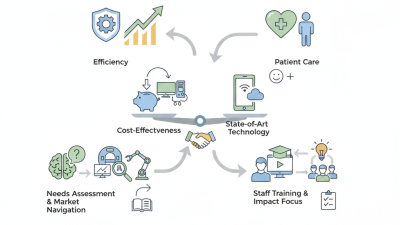
Medical procurement in 2026 requires more than comparing prices. Buyers should examine clinical accuracy, maintenance needs, cybersecurity, and supplier evidence. A reliable evaluation begins with the intended setting. A rural clinic may need durable portable devices, while a hospital may prioritize connectivity and high patient volume.

Ask for calibration records, user training plans, warranty terms, and independent performance data. Check whether the instrument supports local power standards and language requirements. Procurement teams should also review regulatory approvals in the destination market. A low purchase price can hide expensive consumables, software fees, or delayed repairs. I have seen specifications look impressive, yet perform poorly when staff training was limited. That risk deserves attention.

Tips: Create a scoring sheet before contacting suppliers. Test sample units with real users. Record response times. Confirm spare-part availability. Request clear documentation, not promises.

Future trends will likely include smarter monitoring, cloud-based reporting, compact diagnostic tools, and stronger interoperability. Artificial intelligence may help identify abnormal readings, but it should support trained professionals rather than replace judgment. Data protection will become a procurement requirement, not an optional feature. Buyers should ask how data is stored, transferred, and deleted. Sustainability will matter too, including energy use, repairability, and responsible disposal. Some forecasts may be overstated. Practical trials remain essential.