The global Clean Room industry is expanding as pharmaceuticals, semiconductors, biotechnology, and medical devices demand tighter contamination control. Grand View Research identifies cleanroom technology as a growing market, supported by advanced manufacturing and stricter product-quality requirements. MarketsandMarkets also highlights increasing investment in modular cleanrooms, monitoring systems, and specialized HVAC equipment.
For global buyers, selecting a manufacturer requires more than comparing catalog prices. A reliable supplier should demonstrate validated design methods, documented testing, and compliance with ISO 14644 cleanroom classifications. Experience matters when a facility must control airborne particles, temperature, humidity, pressure, and operator movement simultaneously. It also matters when production cannot stop.
Details matter.
This Top 10 Clean Room Manufacturers for Global Buyers guide examines manufacturers through practical purchasing criteria. These include engineering capability, certification support, installation experience, maintenance response, customization, and international project delivery. Buyers may also review HEPA or ULPA filtration, air-change performance, panel materials, lighting layouts, and digital environmental monitoring.
The market data is useful, but not perfectly comparable. Research firms apply different definitions, regions, and forecasting methods. A larger company is not automatically the best fit for every project. Sometimes, a responsive regional partner performs better than a global brand.
Quality is measurable.
The shortlist therefore combines industry visibility with buyer-focused evidence. It considers published technical documentation, project experience, quality systems, and service coverage. Readers should still verify current certifications, references, lead times, and local regulatory requirements before signing a contract. This approach supports informed decisions across demanding and highly regulated manufacturing environments.
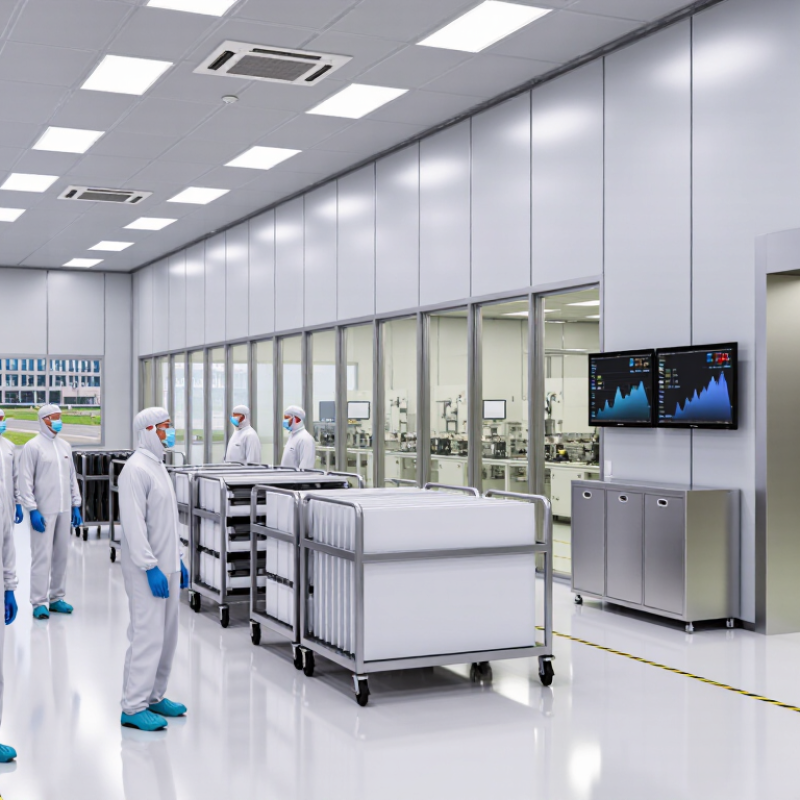
Clean room manufacturing covers more than panels, doors, and visible equipment. It includes airflow design, filtration, pressure control, temperature stability, monitoring, installation, and validation.
A reliable facility should match its intended process. Pharmaceutical production may require GMP controls, while electronics manufacturing often focuses on particle limits and electrostatic protection. ISO 14644 classification provides a common framework for airborne cleanliness. However, classification alone does not prove operational performance. Details matter. Buyers should review airflow visualization, HEPA filter integrity tests, recovery time, pressure records, and calibration certificates. A clean room that looks bright and sealed may still perform poorly near doors, corners, or equipment.
Supplier evaluation should examine engineering calculations, material traceability, factory testing, site acceptance testing, and after-sales support. Ask how the manufacturer handles contamination risks during construction. Request sample validation protocols and maintenance schedules before signing a contract. Local building, fire, electrical, and occupational requirements also need confirmation because international standards may not cover every obligation. Numbers need context. A low particle count during an empty-room test can change after operators, machines, and packaging enter the space. This is where many purchasing decisions become too optimistic. The strongest manufacturers explain limitations clearly, document deviations, and offer practical corrective actions instead of promising perfect control. Their technical team should communicate in measurable terms, not only polished marketing language.

Anonymized comparison of manufacturer capabilities, applicable standards, and buyer evaluation factors
| Rank | Anonymized Manufacturer Profile | Primary Manufacturing Scope | Typical Applications | Common Cleanliness Range | Applicable Standards | Engineering & Validation Scope | System Configuration | Indicative Project Scale | Global Buyer Evaluation Focus |
|---|---|---|---|---|---|---|---|---|---|
| 01 | Profile A — Turnkey Pharmaceutical Specialist | Design, fabrication, installation, HVAC integration, commissioning, and qualification | Sterile manufacturing, aseptic filling, formulation, and packaging | ISO Class 5–8; EU GMP Grades A–D where applicable | ISO 14644-1, ISO 14644-2, EU GMP Annex 1, WHO GMP principles | URS review, room classification, airflow visualization, HEPA leak testing, recovery testing, and environmental monitoring support | Modular sandwich panels, flush doors, coving, pass-throughs, and pressure cascade control | Approx. 100–10,000 m² | GMP experience, contamination-control strategy, validation documentation, and lifecycle support |
| 02 | Profile B — Semiconductor and Electronics Specialist | High-grade cleanroom design, raised floors, FFU systems, and utility coordination | Semiconductor fabrication, display production, precision optics, and electronics assembly | ISO Class 3–7 | ISO 14644 series, SEMI facility practices, ASHRAE guidance where relevant | Particle mapping, airflow balancing, vibration coordination, temperature and humidity control, and energy modeling | T-bar or walkable ceilings, raised access floors, FFUs, return-air plenums, and low-outgassing finishes | Approx. 1,000–50,000 m² | Uniformity, vibration performance, particle control, utility integration, and operating cost |
| 03 | Profile C — Modular Cleanroom Manufacturer | Factory-built wall, ceiling, door, window, and equipment modules | Laboratories, medical devices, cosmetics, food processing, and light industrial production | ISO Class 6–8 | ISO 14644-1, ISO 14644-2, applicable local building and fire codes | Layout development, airflow calculations, installation inspection, particle testing, and basic commissioning | Prefabricated insulated panels, modular ceilings, interlocking joints, and configurable service panels | Approx. 20–2,000 m² | Delivery speed, future expansion, panel interchangeability, installation quality, and total cost |
| 04 | Profile D — Healthcare and Hospital Specialist | Operating-room suites, isolation rooms, sterile compounding rooms, and controlled environments | Hospitals, pharmacies, diagnostic laboratories, and clinical research facilities | ISO Class 5–8, depending on room function | ISO 14644-1, ISO 14644-2, local healthcare HVAC and infection-control requirements | Pressure relationship testing, airflow visualization, filtration checks, temperature and humidity verification | Hygienic wall systems, coved junctions, sealed lighting, antimicrobial-compatible surfaces, and observation windows | Approx. 50–5,000 m² | Infection-control compliance, maintainability, hospital coordination, downtime reduction, and service response |
| 05 | Profile E — Biopharmaceutical and Cell-Therapy Specialist | GMP facilities, material and personnel flows, process zoning, and contamination-control design | Biologics, vaccine production, cell therapy, gene therapy, and laboratory development | ISO Class 5–8; GMP grades assigned by process risk | ISO 14644 series, EU GMP Annex 1, PIC/S GMP guidance, and FDA cGMP expectations | Contamination-control strategy, cleanroom qualification, process simulation support, and data-integrity documentation | High-performance panels, airlocks, pass boxes, pressure monitoring, and segregated production zones | Approx. 200–15,000 m² | Regulatory readiness, single-use process integration, cross-contamination prevention, and qualification records |
| 06 | Profile F — Food and Cosmetics Hygiene Specialist | Hygienic production rooms, temperature-controlled areas, air filtration, and washable finishes | Food, beverages, cosmetics, personal care, and nutraceutical products | ISO Class 7–8 or application-specific hygiene zones | ISO 14644-1 where classified rooms are used, HACCP principles, and applicable food hygiene codes | Airflow verification, temperature and humidity testing, cleanability review, and hygienic design inspection | Washable insulated panels, sealed floors, hygienic drains, impact-resistant doors, and corrosion-resistant finishes | Approx. 100–8,000 m² | Cleanability, moisture resistance, food-contact compatibility, maintenance access, and hygienic zoning |
| 07 | Profile G — Laboratory and Research Facility Specialist | Laboratory planning, controlled-environment rooms, fume-control coordination, and utility services | Universities, testing laboratories, R&D centers, and analytical facilities | ISO Class 6–8 | ISO 14644-1, ISO 14644-2, laboratory safety codes, and local mechanical regulations | Risk assessment, airflow studies, pressure testing, temperature stability testing, and commissioning documentation | Flexible partitions, service chases, ceiling grids, laboratory casework interfaces, and adaptable utilities | Approx. 30–3,000 m² | Flexibility, utility density, future reconfiguration, safety separation, and documentation quality |
| 08 | Profile H — Prefabricated Softwall and Clean Booth Specialist | Localized clean zones, softwall enclosures, clean booths, and portable filtration units | Assembly, inspection, packaging, medical devices, and pilot production | ISO Class 5–8, depending on airflow and filtration design | ISO 14644-1, ISO 14644-2, and applicable electrical and workplace safety codes | Particle-count testing, airflow measurement, filter integrity testing, and basic operational verification | Aluminum framing, vinyl curtains, FFUs, HEPA or ULPA filtration, and modular workstations | Approx. 5–500 m² | Rapid deployment, relocation capability, filtration efficiency, access control, and upgrade options |
| 09 | Profile I — International EPC and Validation Contractor | Engineering, procurement, construction management, controls, commissioning, and qualification | Large pharmaceutical, biotechnology, healthcare, and industrial facilities | ISO Class 5–8; GMP zoning according to process requirements | ISO 14644 series, EU GMP, FDA cGMP, GAMP 5 principles, and local construction codes | DQ, IQ, OQ, PQ support, computerized-system coordination, commissioning, and turnover packages | Integrated architectural, HVAC, electrical, process utility, automation, and monitoring systems | Approx. 1,000–100,000 m² | Project governance, schedule control, subcontractor management, regulatory documentation, and local execution capacity |
| 10 | Profile J — Energy-Efficient Cleanroom Systems Specialist | HVAC optimization, heat recovery, variable-air-volume control, monitoring, and retrofit solutions | Existing pharmaceutical, electronics, laboratory, and healthcare facilities | ISO Class 5–8, subject to system design and process needs | ISO 14644 series, ASHRAE guidance, local energy codes, and applicable GMP requirements | Energy baseline assessment, airflow balancing, HVAC qualification, BMS integration, and performance monitoring | Existing-room retrofit, efficient AHUs, EC fans, demand control, heat recovery, and continuous monitoring | Approx. 100–20,000 m² | Energy intensity, pressure stability, maintenance access, retrofit risk, payback period, and validated performance |
Selecting the top ten clean room manufacturers requires more than polished brochures or impressive factory photographs. We compare validated performance, documented experience, and regional service capacity. The framework follows ISO 14644-1 classification principles. It examines particle-control results under defined operating conditions. A room may look immaculate. Yet, it can fail a recovery-time test.
Market evidence also shapes the shortlist. Grand View Research estimates the global cleanroom technology market reached about USD 5.1 billion in 2023, with continued growth through 2030. Fortune Business Insights reports a similar 2023 market value, although its forecast uses a different market scope. These differences deserve attention. They show why one report should never decide a ranking.
Each manufacturer receives practical checks for airflow design, HEPA filter integrity testing, temperature stability, and commissioning records.
We also review energy performance, maintenance access, spare-parts planning, and technician response times.
Site visits can reveal details that proposals hide, such as awkward service panels or poor cable routing.
Independent validation carries more weight than self-published claims.
We score pharmaceutical, medical, semiconductor, and research-project experience separately because their risk profiles differ.
No ranking is flawless. Local regulations, project size, and operating culture can change the final choice.
References from comparable facilities remain essential, especially when reported results lack raw test data.
The ten profiles examine cleanroom manufacturers through practical criteria: panel systems, airflow control, validation support, delivery capacity, and lifecycle service. Each company is assessed against ISO 14644-1 expectations, not glossy claims. A useful supplier should explain particle-control performance, pressure cascades, filter testing, and maintenance access in clear language.
Market size signals remain strong. MarketsandMarkets estimated the global cleanroom technology market at about USD 5.6 billion in 2023, projecting roughly USD 8.7 billion by 2028. Fortune Business Insights reported different figures, estimating USD 5.5 billion in 2023 and USD 10.6 billion by 2032. Methodologies differ. That matters. The ten profiles therefore compare evidence rather than repeating one market forecast.
Several manufacturers specialize in modular pharmaceutical rooms, while others focus on semiconductor environments, hospital suites, or food-processing zones. Their profiles review installed-project experience, energy performance, HEPA filtration design, commissioning records, and local technical coverage. One manufacturer may offer faster installation but weaker after-sales support. Another may provide excellent validation documents yet lack regional spare parts. Buyers should inspect airflow maps, recovery-time tests, warranty terms, and operator training records before signing. These details are less impressive than a showroom. They are usually more useful. Some published performance data also depend on ideal laboratory conditions, so independent verification remains necessary.
A reliable Top 10 clean room manufacturers list should examine global technologies, certifications, and real operating conditions. Buyers need more than attractive project photos. ISO 14644-1 defines airborne particle classes, while ISO 14644-2 supports continuous performance monitoring. Pharmaceutical projects also require alignment with EU GMP Annex 1, FDA aseptic-processing guidance, or equivalent national rules. Certification alone is not proof of performance.
Modern facilities combine modular wall systems, HEPA or ULPA filtration, fan-filter units, pressure controls, and digital building-management systems. Semiconductor, pharmaceutical, medical-device, aerospace, and food industries need different airflow patterns and contamination limits. The Lawrence Berkeley National Laboratory reports that cleanrooms may consume 30 to 50 times more energy than ordinary office areas. That figure makes energy recovery, variable-speed fans, and validated controls commercially important. Grand View Research also identifies pharmaceutical expansion and advanced electronics as major cleanroom technology growth drivers. Market forecasts differ, however, because analysts define “cleanroom technology” differently.
Tips: Request particle-count maps, airflow-visualization records, recovery-time tests, and calibration certificates. Check whether installation teams understand local regulations. A low initial quotation can hide higher energy and maintenance costs. Some supplier rankings also overvalue factory size. That is worth questioning. Compare lifecycle evidence, not only certifications, delivery promises, or polished brochures. Insist on documented commissioning and operator training before production begins.
ISO 14644-1 cleanroom classification reference used by global cleanroom manufacturers. The chart shows the maximum permitted concentration of particles ≥0.5 μm per cubic metre for ISO Classes 3–9.
Lower particle limits indicate stricter environmental control. These classifications are commonly applied across pharmaceutical, semiconductor, healthcare, aerospace, biotechnology, and medical-device facilities.
A Practical Comparison for International Buyers
Selecting among the top ten clean room manufacturers requires more than comparing brochure prices. International buyers should examine design experience, certification records, export capability, and after-sales support. A reliable manufacturer can provide validated drawings, airflow calculations, material certificates, and clear installation procedures. Documentation matters.
The strongest suppliers usually fall into several groups: turnkey engineering firms, modular panel specialists, HVAC-focused manufacturers, and validation partners. Turnkey companies may simplify coordination, while modular specialists can shorten installation time. HVAC experts often provide stronger control over temperature, humidity, pressure cascades, and HEPA filtration. Buyers should request ISO 14644-related testing methods, factory acceptance procedures, and site acceptance plans before signing.
Details decide. Check panel joints, door seals, lighting access, floor loading, and cleaning resistance. Ask how equipment will arrive at the destination. Crated filters, damaged corners, and missing fasteners can delay commissioning. Confirm local electrical standards, import documents, spare-part availability, and technician response times. A lower quotation may exclude testing, training, or balancing work.
Real project comparisons are rarely perfect. One manufacturer may offer excellent engineering but limited regional service. Another may have fast delivery but weaker validation support. Buyers should score each supplier against risk, not appearance. A factory visit, reference call, and sample quality dossier can reveal more than polished presentations. Sometimes, the most expensive option is not the safest; sometimes, the cheapest one creates costly rework.
©2026Infinium Medical
Adding {{itemName}} to cart
Added {{itemName}} to cart