Automatic Diaper production depends on reliable equipment, careful process control, and support that continues after installation. Choosing a machine supplier can shape product consistency, factory output, and future expansion. Yet supplier descriptions often emphasize speed and capacity. Buyers also need to examine changeover time, material compatibility, operator training, and maintenance access.
This guide introduces ten Automatic Diaper machine suppliers with an international presence. It offers a practical starting point, not a universal ranking. A machine suited to one factory may be a poor fit for another. Product range, target production volume, available floor space, and local service coverage all affect the decision. Small details matter. For example, access to a sealing unit can influence how quickly a maintenance team resolves a stoppage.
The overview focuses on factors procurement teams can verify, including equipment configurations, automation features, technical support, and customization options. Where possible, compare documented specifications rather than relying on broad marketing claims. Ask suppliers about commissioning, spare-part availability, training, and performance testing under realistic conditions. These checks help reveal the difference between a promising brochure and a workable production plan. No supplier is perfect, and published information may not answer every question. Readers should confirm current capabilities directly with each company before making a shortlist or investment decision.
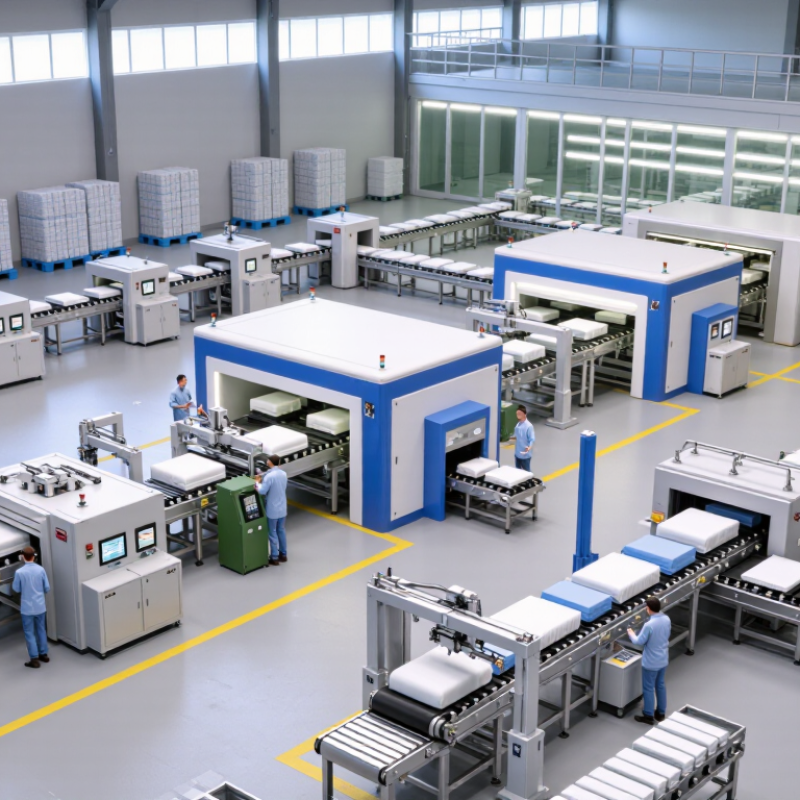
Automatic diaper machines turn rolls of nonwoven fabric, absorbent material, and elastic into consistently shaped products. Unwinders feed the materials through forming, bonding, cutting, and folding stations. Sensors monitor web tension and product position as the line runs. Small errors matter. A drifting layer can create uneven edges or weak seals, leading to rejected products and wasted material. Operators therefore check alignment, seal quality, and absorbent-core placement throughout production, not only at startup.
Grand View Research estimated the global baby diaper market at USD 83.85 billion in 2023 in its Baby Diapers Market report. That figure describes market value, not machine sales or production volume, so it should not be treated as a direct forecast for equipment demand. Still, it signals the scale of the supply chain these machines serve. Automatic lines help manufacturers maintain repeatable output and change product formats, though changeovers can take time and need careful adjustment. Speed alone is not enough. Reliable performance also depends on maintenance, material consistency, and trained staff. One detail is easy to overlook: a fast line can magnify small setup mistakes.

Compare suppliers by how well their equipment fits your product, output target, and factory conditions. Ask for verified production data, including diaper size range, changeover time, material waste, and sustained speed. A brief peak-speed demonstration tells little about a full shift. Request references from plants using similar absorbent cores and packaging formats.
Tips: Ask to see a changeover, not just a running line. Check sample diapers for seal consistency, fit, and absorbency. Confirm spare-parts lead times, technician availability, training, and remote support across your operating hours. Put response times and acceptance tests in writing.
Inspect the machine layout, guarding, controls, and access points with your maintenance team. Small details matter: Can an operator reach a sensor without stopping half the line? Review commissioning plans and performance guarantees carefully. Even thorough checks miss things; a polished demo can hide awkward changeovers. Budget for installation, utilities, and operator training, not only the purchase price. A supplier’s answers should be specific, documented, and consistent across sales and engineering staff.
| No. | Evaluation Dimension | What to Assess | Evidence to Request | Practical Evaluation Guidance |
|---|---|---|---|---|
| 1 | Product and machine scope | Whether the supplier offers equipment suited to the required diaper type, size range, production layout, and level of automation. | Machine configuration, product specifications, layout drawings, and a list of included and optional modules. | Compare suppliers using the same product specification and clearly identify any equipment or process steps excluded from the quotation. |
| 2 | Verified production capacity | Quoted output for the proposed configuration and the conditions used to calculate that output. | Written capacity assumptions, product format, operating-speed definition, and results from a witnessed production test. | Distinguish maximum mechanical speed from sustained production output. Ask suppliers to state the test conditions and how good output is measured. |
| 3 | Product quality and consistency | Ability to manufacture products that meet agreed dimensions, absorbency design, seal integrity, and appearance requirements. | Approved product samples, inspection criteria, test records, and a documented quality-control plan. | Evaluate samples against the buyer’s own product specification; do not rely on machine speed or general quality claims alone. |
| 4 | Changeover and flexibility | How the equipment handles different sizes, product designs, raw materials, and production changeovers. | Changeover procedure, tooling and component list, stated changeover conditions, and a demonstration where practical. | Confirm which changes require manual adjustment, additional tooling, or replacement parts, and compare changeover time using the same scope. |
| 5 | Automation and controls | Control-system functions, operator interfaces, alarms, recipe management, and availability of production data. | Controls description, sample screens, alarm documentation, software and backup policy, and operator-training plan. | Check that the proposed controls can be supported at the installation site and that the buyer can obtain agreed operating and maintenance documentation. |
| 6 | Safety and regulatory documentation | Machine guarding, emergency stops, risk documentation, and conformity requirements applicable in the destination market. | Risk assessment, safety documentation, electrical drawings, and applicable conformity documentation for the destination country or region. | Confirm applicable requirements with the buyer’s compliance team. A general claim of compliance should be supported by documentation for the actual machine configuration. |
| 7 | Installation and commissioning | Supplier responsibilities for delivery, installation, commissioning, acceptance testing, and production ramp-up. | Project schedule, scope-of-work document, site utility requirements, acceptance-test procedure, and a clear responsibility matrix. | Agree in advance on site readiness, customer responsibilities, acceptance criteria, and how unresolved issues will be recorded and addressed. |
| 8 | After-sales service and training | Availability of technical support, service personnel, operator and maintenance training, and escalation processes. | Service coverage details, support channels, training syllabus, service terms, and examples of maintenance documentation. | Assess support for the intended operating location and time zone; obtain response and service commitments in writing rather than assuming universal coverage. |
| 9 | Spare parts and maintainability | Identification of wear parts, recommended stock, maintenance access, and the process for ordering replacement components. | Recommended spare-parts list, parts catalogue, maintenance schedule, and stated supply and shipping arrangements. | Compare the cost and availability of critical parts and clarify which components are standard, custom-made, or included in the purchase. |
| 10 | Commercial terms and total cost | Purchase price alongside the full project scope, payment terms, warranty, exclusions, and expected operating costs. | Itemized quotation, warranty terms, delivery schedule, installation costs, exclusions, and documented assumptions. | Compare like-for-like quotations and consider lifecycle costs such as tooling, training, spare parts, utilities, and service—not price alone. |
A worldwide comparison of automatic diaper machine suppliers should look beyond quoted line speed. Buyers need evidence on uptime, material waste, changeover time, and local service coverage.
Fortune Business Insights valued the global baby diaper market at USD 83.09 billion in 2023, indicating substantial demand for consistent production capacity. Yet market growth does not prove that any individual machine will meet a factory’s needs.
Check the machine’s output using the intended diaper size, absorbent core, and packaging setup.
The UN’s World Population Prospects 2022 estimated about 134 million births worldwide in 2021. That scale helps explain why manufacturers invest in automated lines, but production conditions differ sharply between plants.
A useful supplier shortlist compares web tension control, elastic placement, vision inspection, reject handling, and spare-parts response. Ask for trial data, not only brochure speeds.
Watch the line run. A brief demonstration may hide stoppages, difficult size changes, or waste during startup.
Published supplier rankings also have limits: they rarely show long-term factory uptime or service quality. That gap deserves attention.
Before choosing among ten suppliers, request references from plants with similar products and operating shifts.
When comparing automatic diaper machine suppliers, look beyond headline speed. Grand View Research estimated the global baby diaper market at USD 83.4 billion in 2023, reflecting demand for consistent, high-volume production. That figure does not tell buyers which machine will perform best. Compare servo-driven forming, absorbent-core handling, elastic placement, and hot-melt control on the same product specification. Ask suppliers to demonstrate size changeovers and camera inspection using your materials. Small differences matter. A misplaced elastic strand or uneven adhesive line can create costly rejects. Smithers’ report, The Future of Global Nonwovens to 2028, tracks demand growth in materials used across hygiene products. This makes material compatibility and waste control practical evaluation criteria, not optional extras.
Capacity figures need careful reading. Request both rated output and sustained output, with the diaper size, operating hours, and reject rate stated. A fast line may lose its advantage during frequent changeovers or material stoppages. I would also ask for a factory acceptance test and sample production data. These checks are not perfect, but they expose assumptions early. Support is equally concrete: compare technician response times, spare-parts availability, remote diagnostics, and operator training. Ask who handles software updates and whether troubleshooting guidance is available in your working language. A detailed service plan can matter more than a small speed advantage. Still, supplier claims are not independent verification; confirm them with reference sites and documented trial results.
Automatic diaper manufacturing equipment is shifting toward faster changeovers, tighter process control, and more useful production data. Servo-driven systems can adjust web tension and cutting positions with less manual intervention. Vision sensors help detect misplaced components, uneven seams, or print errors before products reach packing. Small details matter. A slight shift in absorbent-core placement can affect fit and comfort.
Energy use and material waste are also shaping equipment design. Some lines now track film, fluff pulp, and nonwoven consumption alongside downtime. Predictive maintenance tools can flag unusual vibration or temperature changes, though they cannot prevent every stoppage. A polished dashboard is not proof of better output. Buyers should examine actual changeover times, reject rates, and service access. I would not call every sensor upgrade essential. For many factories, reliable tension control and clear operator training still deliver the more practical gains. Global suppliers are responding to these needs, but performance depends on product design, plant conditions, and the skill of the people running the line.
©2026Infinium Medical
Adding {{itemName}} to cart
Added {{itemName}} to cart