Choosing a Facial Analysis Machine is not simply a matter of selecting the sharpest camera or largest screen. Clinics need dependable data, trained users, and clear clinical boundaries. A device may display pores, pigmentation, redness, wrinkles, or hydration levels within seconds. Yet bright lighting, skin moisture, and camera distance can change the result.
Dr. Grant Stevens, a recognized aesthetic medicine expert, offers a useful principle: “Technology should support clinical judgment, not replace it.” That reminder matters when comparing brands. Buyers should examine image consistency, software updates, measurement methods, reporting tools, and staff training. Ask whether the system has documented validation, responsive technical support, and practical integration with existing consultation workflows. A beautiful interface is not enough.
Privacy also deserves attention. Patient images should be stored securely, accessed only by authorized staff, and managed through clear consent procedures. Suppliers should explain data retention and maintenance responsibilities in plain language. Do not accept vague promises.
Small details reveal product quality. Can the machine capture a repeatable image after a patient removes makeup? Does it work in a narrow consultation room? Can staff understand its report without technical guesswork? These questions often matter more than promotional claims.
No Facial Analysis Machine is perfect. Some results may look more precise than they truly are. That is the uncomfortable part. A responsible buyer compares evidence, tests the workflow, and leaves room for human interpretation. The right choice should improve consultations, not create false certainty.
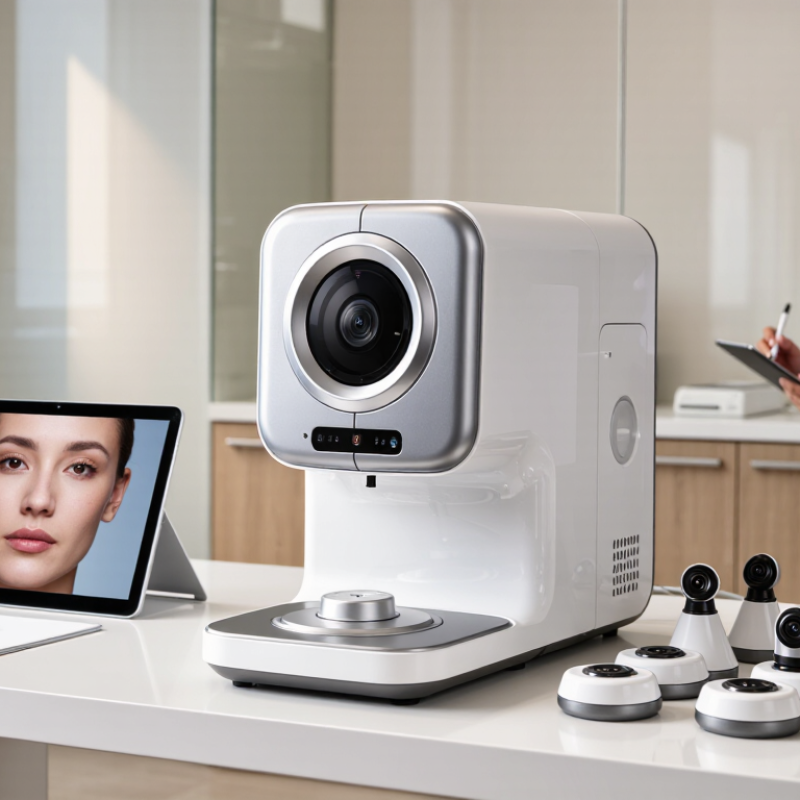
Start with the decision you need to support. Do you want consultation images, progress tracking, product guidance, or treatment documentation? Each goal requires different features. A device built for visual comparison may not measure hydration or pigmentation accurately. Data is not diagnosis.
McKinsey & Company’s 2023 beauty industry report projected the global beauty market could reach about $580 billion by 2027. This expansion is increasing demand for measurable, personalized consultations. However, market growth does not guarantee useful equipment. Define acceptable accuracy, image repeatability, reporting speed, and staff training before comparing specifications.
Test machines in realistic conditions. Place one beside a treatment bed and capture the same client under normal clinic lighting. Check whether skin images remain consistent after small changes in distance, posture, or temperature. Look for adjustable lighting, high-resolution imaging, clear scoring methods, and exportable reports. Privacy controls also matter, especially when storing facial photographs.
The ISO 13485 quality framework emphasizes controlled processes and documented risk management for medical-device manufacturers. A facial analysis machine may not be a medical device, but its quality principles remain practical. Ask for calibration procedures, software update records, technical support terms, and evidence from independent testing. Be skeptical of dramatic claims.
I would not choose the machine with the most colorful dashboard. A simple report may help staff explain results more clearly. Some features can become distractions. Reconsider the purchase after a short trial, because real workflow problems often appear later.

Buying a facial analysis machine requires more than counting camera lenses. Ask what each sensor actually measures. Some systems use standard RGB images to estimate visible concerns such as redness, pores, or uneven tone. Others add polarized light, multispectral imaging, or depth sensors. These methods do not measure the same thing. An RGB image may show surface color, while depth mapping can reveal texture and contour. Multispectral readings may detect subtle changes beyond ordinary vision, but interpretation depends on validated algorithms. More data is not automatically better.
Accuracy also depends on testing conditions. Uneven lighting, reflective skincare products, facial movement, and camera distance can change results. Skin tone diversity matters too. Request performance data from controlled trials, including sample size, error ranges, and testing conditions. A reliable supplier should explain calibration procedures and maintenance intervals clearly. Ask whether the machine repeats similar readings on the same person. It should.
In a clinic or consultation room, compare readings from the same face under fixed lighting. Record the room temperature, camera height, and cleansing routine. Small details affect consistency. A machine may produce impressive images but weak measurements. That difference is easy to miss. Check whether trained professionals reviewed the algorithm’s outputs. Independent validation is stronger than promotional claims. Still, no device is perfect. Some results may look overly precise, and that deserves scrutiny before influencing skincare recommendations.
10 Tips for Buying a Facial Analysis Machine?
A reliable facial analysis machine should produce consistent results under different lighting conditions. Test it beside a window, under ceiling lights, and in a dim room. Compare repeated scans of the same person. Large changes may reveal weak calibration or unstable software. Ask for documented accuracy tests, calibration procedures, and maintenance requirements. Do not accept a certificate without checking its scope and issuing organization.
Safety needs practical attention. Examine electrical safety reports, electromagnetic compatibility testing, and materials that touch the skin. Confirm that the device follows applicable local requirements. User data also needs protection. Ask where facial images are stored, who can access them, and how consent is recorded. A secure password is useful, but it is not enough. Clear data-retention controls matter.
Ease of use affects real clinic performance. The interface should guide staff through positioning, lighting, and image capture. Instructions must be clear enough for a new employee to follow. Check whether reports explain findings without overstating them. A facial analysis result should support professional consultation, not replace clinical judgment. I would also test cleaning between appointments. Small awkward details often become daily problems. A beautiful display can hide weak training materials, slow updates, or confusing error messages. My evaluation may not be perfect, so I would invite several users to test the machine and record their difficulties.
| No. | Evaluation Dimension | What to Check | Recommended Evidence or Benchmark | Buying Risk if Neglected |
|---|---|---|---|---|
| 1 | Image Quality | Review camera resolution, focus consistency, exposure control, lighting uniformity, and image sharpness across different skin tones. | Request sample images captured under the same conditions. Confirm that the technical specification identifies sensor resolution and illumination type rather than using only terms such as “high definition.” | Blurry or uneven images can produce inconsistent measurements and make before-and-after comparisons unreliable. |
| 2 | Measurement Validity | Determine whether the system reports observable image-based indicators or makes medical diagnostic claims. | Ask for validation methodology, test population details, repeatability data, and definitions for terms such as pores, wrinkles, pigmentation, redness, and texture. Treat cosmetic scores as estimates, not clinical diagnoses. | Unvalidated scores may mislead users, especially when used to recommend treatments or products. |
| 3 | Lighting and Environmental Control | Check whether ambient light, distance, camera angle, facial expression, and makeup affect the results. | Look for a fixed imaging position, controlled illumination, face-position guides, and written capture instructions. A repeat test should use the same lighting and camera distance. | Changing capture conditions can be mistaken for genuine skin improvement or deterioration. |
| 4 | Safety and Electrical Compliance | Verify electrical safety, power supply compatibility, overheating protection, cable condition, and the intended operating environment. | Request applicable conformity documents and test reports. IEC 60601 requirements may apply to medical electrical equipment, while ordinary cosmetic imaging devices may follow different rules depending on their intended use and market. | Non-compliant equipment can create electrical, fire, liability, or market-access problems. |
| 5 | Privacy and Data Protection | Find out where facial images are stored, who can access them, how long they are retained, and whether they are transferred to a cloud service. | Require a privacy notice, data-processing terms, deletion workflow, access controls, encryption information, and consent procedures. GDPR or other privacy laws may apply depending on location and processing activities. | Poor data controls can expose sensitive facial information and create regulatory or reputational risk. |
| 6 | Software and Algorithm Transparency | Assess how results are calculated, how often the software is updated, and whether the system distinguishes measurement from interpretation. | Request a feature list, version history, update policy, calculation definitions, and information about testing across different ages, skin tones, and facial conditions. | Opaque or frequently changing algorithms can make results difficult to explain and compare over time. |
| 7 | Ease of Use and Workflow | Evaluate setup time, user guidance, language options, report generation, customer records, and staff training requirements. | Conduct a live demonstration. Record the number of steps from registration to report, and confirm that a new operator can complete the process using the supplied instructions. | A complicated workflow reduces staff adoption and increases capture or interpretation errors. |
| 8 | Hygiene and Physical Design | Inspect surfaces, removable contact parts, ventilation openings, cable routing, and cleaning requirements. | Choose non-porous, easily cleanable surfaces where possible. Request approved cleaning agents and confirm that cleaning instructions do not damage lenses, coatings, or touchscreens. | Difficult-to-clean equipment may increase cross-contamination risk and shorten service life. |
| 9 | Integration and Reliability | Check compatibility with computers, tablets, customer-management systems, printers, network connections, and backup procedures. | Confirm supported operating systems, file-export formats, offline functionality, backup options, warranty coverage, spare parts, and expected service response times in writing. | Compatibility issues or prolonged downtime can interrupt consultations and cause data loss. |
| 10 | Total Cost and Return on Investment | Calculate the complete cost of ownership, including installation, software subscriptions, training, maintenance, consumables, tax, and replacement parts. | Compare the three-year total cost with the expected number of consultations. Request a written quotation that separates one-time fees from recurring charges and states cancellation terms. | A low purchase price may become expensive when recurring software, support, or repair costs are included. |
Note: Regulatory requirements depend on the device’s intended use, technical functions, and sales market. Cosmetic facial analysis results should not be presented as a medical diagnosis unless the device is legally authorized for that purpose.
10 Tips for Buying a Facial Analysis Machine
When evaluating a facial analysis machine, test the software, not only the camera. Check skin-condition categories, image guidance, report customization, language options, and export controls. Ask whether results remain consistent under different lighting, angles, and skin tones. Live testing matters.
NIST’s Face Recognition Vendor Test reports show that demographic performance differences can vary across algorithms and image conditions. Facial analysis is not identical to recognition, but the warning remains relevant. Request validation data from the supplier. Review false positives, confidence scores, and update procedures. A polished interface can still produce uncertain conclusions.
Data security needs equal attention. Confirm encryption during transfer and storage, role-based access, audit logs, retention settings, and deletion workflows. The IBM Cost of a Data Breach Report 2024 placed the global average breach cost at 4.88 million dollars. Cisco’s 2024 Data Privacy Benchmark Study found that 94% of organizations believe customers will avoid companies that mishandle data. That risk feels very real in a treatment room.
Customer support should include installation training, response-time targets, software updates, and clear escalation routes. Ask for anonymized support examples. Do not accept vague promises. I would also test the system after a failed scan or network interruption. My own concern is simple: buyers often measure speed first, then discover support gaps later. A cheap machine can become expensive when nobody answers.
Recommended review weights for comparing software functions, data security, measurement quality, and customer support before purchase.
Use this 100-point evaluation framework to compare machines consistently. Give the greatest attention to software capabilities, privacy protection, measurement validity, and imaging quality. Confirm customer support, training, reporting, and total ownership costs before making a final decision.
The purchase price is only the visible part of your budget. Calculate shipping, taxes, installation, staff training, software subscriptions, and annual maintenance. Include replacement sensors, calibration, and possible downtime. My early estimate was wrong because I ignored setup time. That gap matters.
Request a written quotation with every fee listed separately. Ask whether software updates, technical support, and data storage cost extra. Check the expected service life and the price of essential components. A low-cost device may become expensive after one year. Keep a contingency allowance of at least ten percent. It may still be insufficient.
Supplier reliability deserves equal attention. Confirm the supplier’s legal registration, product documentation, warranty terms, and repair process. Ask for evidence. Request references from clinics or salons using similar equipment. A live demonstration should show normal results, not only carefully selected cases. Verify measurement accuracy through independent test reports when available. Review privacy controls, user permissions, and data retention settings before collecting customer information. The supplier should explain limitations clearly and avoid unrealistic diagnostic claims. Written answers are safer than verbal promises. I have learned that a polished presentation proves little without responsive after-sales support. Call the service line before purchasing. Notice how quickly and precisely they respond. A reliable supplier should provide training materials, maintenance schedules, and a clear escalation route. No supplier is perfect. The contract should still define responsibilities, response times, refund conditions, and acceptable performance.
©2026Infinium Medical
Adding {{itemName}} to cart
Added {{itemName}} to cart