How to Choose Molecular Biology Reagents for Your Research Needs?
In the ever-evolving field of molecular biology, the selection of suitable Molecular Biology Reagents plays a crucial role in research outcomes. According to a report by MarketsandMarkets, the global molecular biology reagents market is projected to reach $34.9 billion by 2025, reflecting its importance in advancing scientific research. The right reagents can significantly enhance the accuracy of experiments, enabling researchers to yield reliable results.
Choosing the appropriate reagents can feel overwhelming, given the vast selection available. Factors such as specificity, sensitivity, and reactivity must be considered. Notably, a study from BioTechniques indicates that improper reagent selection can lead to experimental failures, prompting researchers to reevaluate their criteria. The challenge lies in balancing cost-effectiveness with quality assurance, as budget constraints often pressure researchers to opt for less reliable options.
A well-informed decision on Molecular Biology Reagents can influence the success of various applications, including genomics and proteomics. Nevertheless, many researchers still struggle with navigating the complexities of this landscape. Comprehensive understanding and evaluation of the available options are essential. Emphasizing quality and reliability over convenience can pave the way for innovation and a deeper understanding of biological systems.
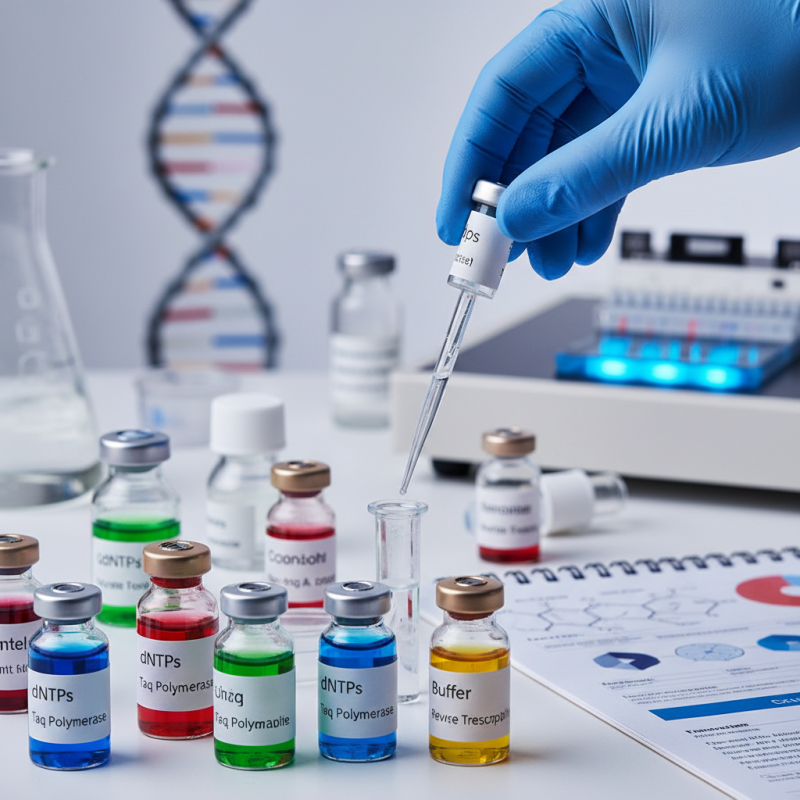
Understanding the Different Types of Molecular Biology Reagents
When selecting molecular biology reagents, understanding their types is crucial. These reagents vary widely and serve distinct purposes. Enzymes, for instance, are vital for processes like PCR. They help amplify DNA, making them essential for genetic studies. These tools are specific and should match your project needs.
Another category is nucleotides. These building blocks make up DNA and RNA sequences. They are necessary for various applications, including cloning and sequencing. Knowing the purity and concentration of nucleotides can influence experimental outcomes. Poor-quality reagents may lead to unreliable results, so careful selection is key.
You may also encounter buffers and salts. These are crucial for maintaining pH during reactions. A small change in buffer composition can significantly impact your results. Understanding these reagents enhances your research, but even experienced researchers can misjudge their needs. Regular reflection on reagent choice is necessary for continual improvement and better results in your experiments.
Assessing Quality and Performance of Molecular Biology Reagents
Choosing the right molecular biology reagents is crucial for research success. The quality of these reagents can significantly affect experimental outcomes. A 2022 report by the International Society for Molecular Biology indicated that up to 30% of failed experiments are due to subpar reagents. Therefore, assessing both quality and performance is essential.
One should examine purity levels and lot-to-lot consistency. For example, high-quality enzymes typically show greater than 95% purity. An inconsistency in enzyme activity can lead to inaccurate results. It’s also worth noting that more than 60% of researchers actively seek detailed performance metrics before making purchases. This reflects the growing demand for transparency in reagent manufacturing.
User reviews and independent validation studies can provide insight into a reagent's reliability. Many researchers rely on peer-reviewed studies that highlight reagent performance in specific applications. However, not all studies report the same level of detail. This can lead to confusion regarding how well a reagent will work in different experimental setups.
Emphasizing the importance of thorough documentation cannot be overstated. Researchers need to remain vigilant, as inadequate information can lead to suboptimal choices.
Evaluating Compatibility with Experimental Protocols and Techniques
Choosing the right molecular biology reagents is crucial for successful experimental outcomes. Compatibility with specific protocols and techniques is vital. For instance, according to a survey by the International Society for Molecular Biology, about 70% of researchers reported setbacks due to reagent incompatibility. Awareness of the reagents’ properties can lead to more reliable results.
Evaluating the compatibility starts with a thorough understanding of your experimental design. Take the time to review the protocols you plan to use. Each technique, whether it’s PCR or Western blotting, may require unique characteristics from reagents. For example, DNA polymerases demand specific buffer conditions. Ensure you consult technical datasheets for detailed compatibility information. Sometimes, a small oversight here can lead to failed experiments.
Tip: Always keep a log of reagents tested with each protocol. It helps in comparing performance across experiments.
Reagent quality is another aspect to consider. Lower-grade reagents may save costs initially but can cause unpredictable results. A report from the Journal of Biological Chemistry indicated that experiments using subpar materials showed a 40% increase in variability. Therefore, make informed decisions. Don’t hesitate to experiment with different sources, but remain cautious about quality control.
Tip: Regularly assess your results to identify any discrepancies. This self-reflection can guide future purchases.
Considering Supplier Reliability and Customer Support Services
When selecting molecular biology reagents, supplier reliability is paramount. A study from the Journal of Biomolecular Techniques indicates that 75% of researchers prioritize supplier reputation. A supplier with a solid track record ensures high-quality products. This minimizes experimental errors that could stem from low-quality reagents. Consistency in results hinges on this crucial factor.
Customer support services also play a vital role. Effective support can make a difference in your research. Reports show that 54% of researchers seek guidance during product selection. Timely responses and knowledgeable staff contribute to better research outcomes. A reliable supplier understands that unresolved queries can lead to significant setbacks. On the other hand, long response times can create frustration and waste valuable research time.
Choosing the right supplier involves more than just product lists. Consider their support network and responsiveness. Engaging with a supplier that invests in customer relations often leads to smoother research processes. Nevertheless, researchers should reflect on prior experiences. Have there been moments where poor support impacted your results? Evaluating past interactions informs better future choices.
Budgeting for Molecular Biology Reagents: Cost vs. Quality
Budgeting for molecular biology reagents is a critical part of laboratory planning. When researchers choose reagents, they often face a cost versus quality dilemma. High-quality reagents may come with a higher price tag. However, they can significantly enhance experimental outcomes. Budget constraints might tempt researchers to opt for cheaper alternatives. This choice can sometimes lead to inconsistent results and wasted time.
Consider the impact of reagent quality on your research. Reliable reagents help ensure reproducibility, which is vital in scientific studies. Spending less initially can result in higher costs later due to repeated experiments. It's essential to evaluate the longevity and stability of the reagents as well. A slightly higher investment in quality can save money in the long run.
Moreover, think about the collaboration effects. If you work in a team, sharing insights on reagent performance can save resources. Exchange experiences with colleagues about different suppliers and formulations. Sometimes, seeking out bulk purchasing options or discounts can ease financial strain. Balancing cost and quality requires ongoing reflection. Adjust your approach based on the outcomes you observe and the insights gained from your research endeavors.
How to Choose Molecular Biology Reagents for Your Research Needs?
| Reagent Type | Cost per Unit | Quality Rating (1-5) | Supplier Source | Recommended Use/Application |
| DNA Polymerase | $200 | 5 | Local Supplier | PCR amplification |
| Restriction Enzymes | $150 | 4 | Local Supplier | Cloning and digestion |
| DNA Ladder | $100 | 5 | Local Supplier | Gel electrophoresis |
| RNA Extraction Kit | $250 | 4 | Local Supplier | RNA isolation |
| qPCR Master Mix | $220 | 5 | Local Supplier | Quantitative PCR |