How to Choose the Best Wireless Patient Monitoring System

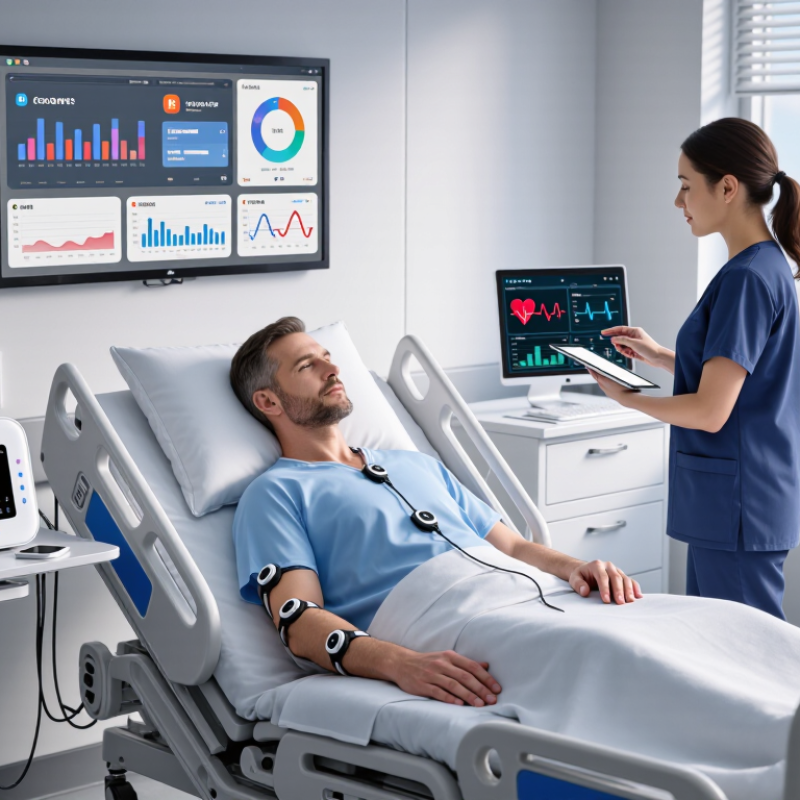
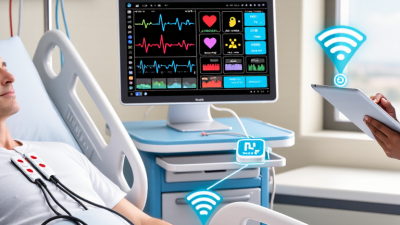
Choosing the best wireless patient monitoring system is not simply a technology decision. It is a clinical decision with daily consequences. A reliable system can capture heart rate, oxygen saturation, temperature, blood pressure, and movement without tethering patients to a bedside monitor. The right choice must support safer care, faster responses, and calmer routines.

Dr. Joseph Kvedar, a physician and digital-health authority, has said, “The future of health care is in the home.” That future depends on practical tools, not impressive specifications alone. Nurses need clear alerts, dependable connectivity, and dashboards that remain readable during a busy shift. Patients need lightweight sensors, simple instructions, and equipment that does not feel intrusive. A wireless patient monitoring system should also integrate with existing clinical workflows and electronic health records.

Small details matter. A sensor that loses contact during a shower can create unnecessary alarm fatigue. A battery that fails overnight can leave an important gap in the patient record. Security, device calibration, data accuracy, technical support, and staff training deserve equal attention. Cost matters, too, but the cheapest device may become expensive when replacements and false alerts accumulate.

There is no perfect system.

Hospitals should test devices in real rooms, with real users, before signing a long-term contract. Pilot results may expose uncomfortable weaknesses. That is useful evidence. This guide examines the key selection criteria, including clinical needs, connectivity, usability, interoperability, privacy safeguards, scalability, and total ownership cost. The goal is a balanced decision that protects patients while helping clinicians work with confidence.
How to Choose the Best Wireless Patient Monitoring System

Define Clinical Monitoring Needs and Patient Care Scenarios

Choosing a wireless patient monitoring system starts with the clinical question, not the device catalog. In practice, clinicians should map each care scenario across a full shift. A postoperative patient may need continuous oxygen saturation, heart rate, and respiratory rate monitoring. A mobile patient may need stable signals while walking to the bathroom. A step-down patient may require ECG data, blood pressure trends, and rapid alarm escalation. Define acceptable latency, coverage, battery duration, and sensor comfort for each case. A monitor that works beside the bed may fail in a crowded corridor.

Talk with nurses, physicians, biomedical engineers, and infection prevention staff before selecting equipment. Their daily experience often reveals overlooked problems, such as alarms hidden during transport or sensors removed during bathing. Consider skin condition, fall risk, patient mobility, and the number of patients one nurse observes. Verify data security, access controls, network resilience, and integration with the clinical record. Test the system in actual rooms, elevators, and recovery areas. A checklist alone can mislead. We once assumed strong ward coverage meant reliable transport coverage, but metal doors and stairwells created signal gaps. That assumption required correction. Pilot testing should measure false alarms, missed readings, response times, and staff workload. Small failures matter. They can change care decisions.
Compare Wireless Monitoring Features, Sensors, and Connectivity

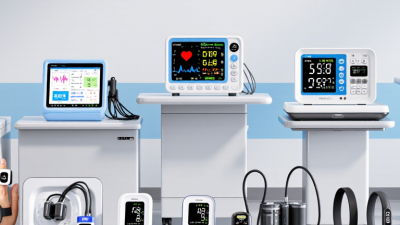
Choosing a wireless patient monitoring system starts with the sensors, not the screen. Pulse oximetry, ECG, respiratory rate, temperature, and blood pressure serve different clinical needs. A 2023 World Health Organization report estimates that one in ten patients experiences harm during healthcare. Poorly placed sensors can worsen that risk through false alarms or missing data.

Compare sensor accuracy, skin comfort, battery life, and cleaning requirements. A disposable patch may reduce cable-related movement, but it creates waste and replacement costs. Reusable sensors need reliable disinfection procedures. I have found that staff acceptance often matters as much as technical specifications. If a sensor irritates skin or slips during transfer, perfect laboratory accuracy becomes less useful.

Connectivity requires equal scrutiny.
Wi-Fi supports high data rates, but coverage gaps can interrupt bedside monitoring. Bluetooth Low Energy usually consumes less power, while cellular connectivity can support mobile patients outside the facility. The U.S. Food and Drug Administration’s 2023 cybersecurity guidance emphasizes secure updates, authentication, and protection of connected medical devices. NIST guidance also recommends continuous risk management, not one-time security checks. Ask whether the system stores data locally during outages, confirms delivery, and records every alarm. These details are easy to overlook. They should not be. A 2024 healthcare cybersecurity survey from HIMSS identified phishing and ransomware among persistent organizational concerns, reinforcing the need to assess encryption and network segmentation before purchase. No system is flawless; testing it in crowded rooms, elevators, and real patient workflows may reveal weaknesses that brochures hide.

Evaluate Data Security, Interoperability, and System Reliability

How to Choose the Best Wireless Patient Monitoring System

A wireless patient monitoring system should protect data before displaying numbers. HHS OCR’s 2024 breach data recorded more than 700 large healthcare breaches. That makes encryption essential, not decorative. Require encryption during transmission and storage, role-based access, phishing-resistant multifactor authentication, and immutable audit logs. HHS cybersecurity performance goals also emphasize asset inventories and tested backups. Ask providers to show how a nurse’s access is recorded, reviewed, and revoked. Security is clinical safety.

Interoperability determines whether a heart-rate alert reaches the correct workflow. The ONC 2023 Data Brief reported that about 70% of hospitals routinely used all four interoperability functions. These included sending, receiving, finding, and integrating health information. Choose systems supporting documented FHIR or HL7 interfaces, patient-identity matching, timestamps, and acknowledgement status. Test admission, transfer, discharge, and duplicate-patient scenarios. Do not guess. A clean demonstration can still hide mapping errors.

Reliability needs measurable evidence. The 2024 Global Data Center Survey reported that 54% of respondents said their latest outage cost over $100,000. For clinical monitoring, demand uptime targets, battery duration, network failover, local buffering, and alarm escalation. Request incident histories and independent validation, not polished slides. Run a 30-minute wireless dead-zone test beside a bed. Then inspect delayed data and alarm recovery. No system is perfect. My selection criteria could still miss rare failures, so require drills, transparent limitations, and a written recovery-time objective.

How to Choose the Best Wireless Patient Monitoring System - Evaluate Data Security, Interoperability, and System Reliability
Evaluation Dimension Weight Recommended Acceptance Level System Profile A System Profile B System Profile C Assessment Focus
Encryption in Transit 15% TLS 1.2 or higher; TLS 1.3 preferred TLS 1.3 TLS 1.2 TLS 1.3 Verify encrypted communication between sensors, gateways, servers, and clinical applications.
Encryption at Rest 10% AES-256 or an equivalent approved encryption method AES-256 AES-256 AES-128 Confirm that stored patient data, backups, and removable media are encrypted.
Identity and Access Control 10% Role-based access, MFA, session timeout, and audit logs RBAC, MFA, audit logs RBAC, password login, audit logs RBAC and MFA Check least-privilege access, account lifecycle management, and administrator controls.
Regulatory and Security Evidence 8% Current security assessment, vulnerability management, and incident-response documentation Annual assessment and documented response plan Security assessment available; response plan under review Assessment evidence available; limited incident detail Request current documentation rather than relying only on marketing claims.
Healthcare Interoperability 15% HL7 FHIR R4 APIs and HL7 v2 support FHIR R4 and HL7 v2 HL7 v2 only FHIR R4 with limited HL7 v2 Evaluate compatibility with electronic health records, clinical workflows, and data-mapping requirements.
Device and Imaging Integration 7% Documented device interfaces; DICOM support where imaging workflows apply Documented interfaces; DICOM supported Documented interfaces; DICOM not supported Limited interface documentation Confirm supported monitor types, device identifiers, timestamps, and data-quality rules.
Data Export and Portability 5% Structured export in FHIR, JSON, or CSV with complete timestamps FHIR, JSON, and CSV export CSV export only FHIR and JSON export Ensure the organization can retrieve data without being locked into a single platform.
Service Availability 12% At least 99.95% monthly service availability 99.98% target 99.90% target 99.95% target Review the service-level agreement, planned maintenance policy, and outage-credit terms.
Wireless Connectivity Resilience 8% Automatic reconnection, local buffering, and less than 1% data loss during testing Automatic reconnection; 24-hour local buffering; 0.3% test loss Automatic reconnection; 4-hour buffering; 1.2% test loss Manual reconnection in some cases; 12-hour buffering; 0.7% test loss Test operation during interference, network outages, roaming, and gateway failure.
Alert Delivery Performance 5% Critical alerts delivered within 30 seconds in at least 95% of tests 97% within 30 seconds 91% within 30 seconds 95% within 30 seconds Measure end-to-end alert time from physiological event to the assigned clinician notification.
Battery and Wearability 3% At least 24 hours of operation under typical monitoring conditions 36 hours 24 hours 30 hours Consider charging workflow, replacement frequency, patient comfort, and infection-control procedures.
Auditability and Reporting 2% Searchable access logs, configuration history, alert history, and exportable reports Complete audit trail and exportable reports Access logs available; limited configuration history Complete audit trail; reports require administrator access Confirm that investigations can reconstruct who accessed, changed, or acknowledged patient data.
Weighted Evaluation Summary Use a 1–5 score for each criterion and multiply by the assigned weight. 4.8 / 5.0 3.6 / 5.0 4.2 / 5.0 Validate all stated values through documentation, demonstrations, and a controlled pilot.

Assess Usability, Mobility, Battery Life, and Staff Workflows

Choosing a wireless patient monitoring system requires more than comparing feature lists. Usability should be tested beside real beds, during admissions, transfers, and alarm checks. Can a nurse read vital signs quickly with gloves on? Are controls clear under dim lighting? Shorter training matters. Staff should attach sensors, replace them, and silence approved alerts without searching through menus. A small usability weakness can create repeated delays across an entire shift.

Mobility affects both safety and comfort. Assess signal stability in patient rooms, corridors, elevators, and areas with dense equipment. The patient should walk, turn, and rest without cables pulling at the skin. Check how the system handles temporary disconnections and whether staff receive a clear status message. Do not trust a single demonstration. Observe several shifts, including a busy handover. Test it moving.

Battery performance needs practical measurement, not a brochure estimate. Record operating time with normal sampling, wireless transmission, and alarm activity. Ask who charges devices, when batteries are swapped, and how failed units are quarantined. A forgotten charging step may become a workflow problem. Alerts should reach the right person at the right time without flooding the team. Review maintenance records, update procedures, and documented failure rates. Every system has compromises. Strong mobility may require more frequent charging. A short pilot can reveal this trade-off, although it may miss seasonal workload pressure.

Review Costs, Vendor Support, Compliance, and Future Scalability

Selecting a wireless patient monitoring system requires more than comparing device prices. Calculate total cost of ownership: sensors, gateways, software licenses, installation, staff training, battery replacement, and integration fees. A low quote can still become expensive. Ask for a three-year cost model with realistic patient volumes and replacement rates.

Vendor support deserves equal attention. During a night shift, a delayed response can affect clinical decisions. Require documented response times, named escalation contacts, remote diagnostics, and local training. The IBM Cost of a Data Breach Report 2024 placed the average healthcare breach cost at $9.77 million. Verizon’s 2024 Data Breach Investigations Report analyzed 30,458 security incidents worldwide. These figures make support and security operational issues, not sales details.

Compliance should cover encryption, access controls, audit logs, data retention, and incident reporting. Map these controls to applicable requirements, such as HIPAA, GDPR, or local medical-device rules. The FDA’s 2023 cybersecurity guidance also emphasizes secure design and postmarket monitoring for connected devices. For future scalability, test interoperability with existing electronic records and nurse-call systems. Confirm support for standard interfaces, cloud migration, additional wards, and higher patient loads. Ask whether older devices remain supported. I often see buyers overlook this point. That mistake is understandable, but costly. A practical pilot should measure alert accuracy, network coverage through concrete walls, battery life, clinician workload, and downtime before a full rollout.