7 Best China RF Beauty Machines for Global Buyers

Choosing professional beauty equipment from China requires more than comparing prices and product photos. This guide introduces seven strong options for global buyers seeking a China Rf Beauty Machine for salons, clinics, spas, or aesthetic practices. Radiofrequency technology is commonly used for controlled skin heating, but performance depends on energy delivery, treatment settings, electrode design, and operator training.

Each selected machine deserves practical evaluation. Look for adjustable power levels, clear temperature monitoring, ergonomic handpieces, stable cooling systems, and straightforward maintenance access. Ask suppliers for technical specifications, user manuals, quality-control records, and relevant market certifications. Reliable manufacturers should explain intended use, contraindications, warranty coverage, spare-part availability, and after-sales support without making unrealistic promises.

Real purchasing experience also reveals small details. A heavy handpiece may become tiring during a busy afternoon. A bright display can still be difficult to read under strong salon lighting. Some suppliers respond quickly before payment, then slowly afterward. That matters. No list is perfect, because product quality can change between batches and regions. Buyers should verify current documentation and request a live demonstration before committing to a large order.

This overview compares seven China RF beauty machines through a buyer-focused lens. It considers treatment versatility, operating convenience, supplier credibility, safety features, and long-term value. The goal is not to promote the most expensive device. It is to identify equipment that fits real workflows, local requirements, and responsible professional practice. Evidence may be limited for certain cosmetic claims, so careful expectations remain essential.
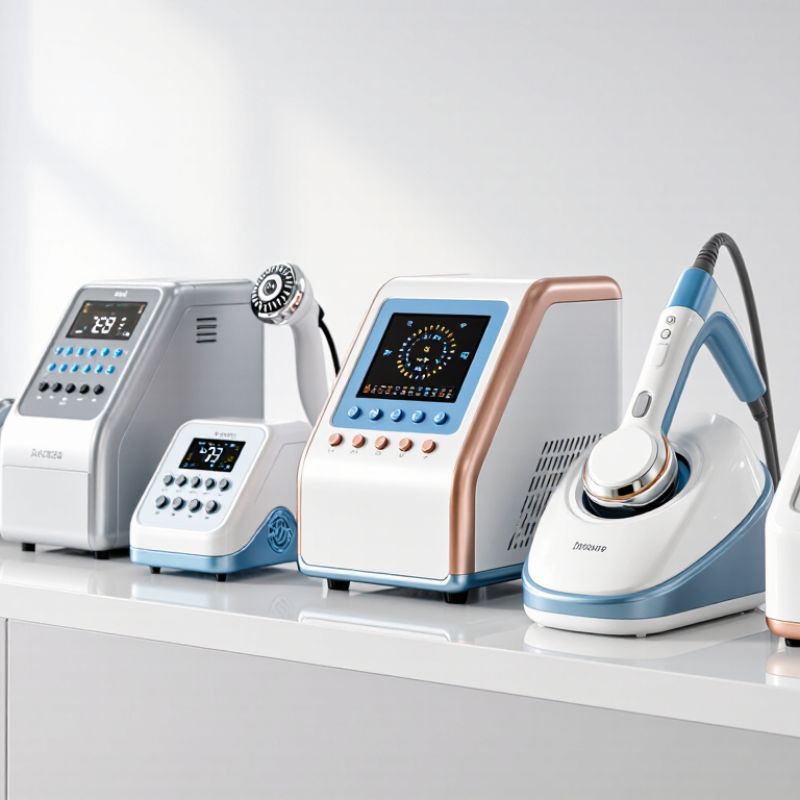
7 Best China RF Beauty Machines for Global Buyers

Understanding RF Beauty Technology and Its Main Applications

7 Best China RF Beauty Machines for Global Buyers

Understanding RF Beauty Technology and Its Main Applications

Radiofrequency (RF) beauty technology uses alternating electrical energy to create controlled heat in targeted tissue. Depending on the electrode design, monopolar, bipolar, and multipolar systems distribute energy at different depths. Practitioners commonly use RF for temporary skin tightening, texture improvement, facial contour support, and body appearance treatments. Some systems combine RF with microneedling, but training and regulatory clearance become especially important.

The market is expanding. Grand View Research estimated the global medical aesthetics market at over USD 15 billion in 2023, with continued growth expected through 2030. A 2024 MarketsandMarkets report also identified energy-based devices as a major segment within aesthetic technology. These figures describe broad markets, not RF alone. Estimates vary, and buyers should examine the methodology before using them in business forecasts.

Real-world performance depends on frequency, power control, contact cooling, treatment timing, and operator technique. A warm sensation may be expected. Excessive heat is not. Professional protocols should include skin assessment, contraindication screening, documented settings, and post-treatment monitoring. Independent clinical studies often report gradual improvements rather than dramatic changes after one session. That matters. Sellers sometimes simplify the evidence too much.

Global buyers should request electrical certifications, user manuals, maintenance records, and clinical documentation. They should also verify local requirements for professional operation and advertising claims. A visually attractive device can still have weak temperature control. Procurement teams need to test consistency, not just appearance.

How to Evaluate China-Made RF Beauty Machines

When evaluating China-made RF beauty machines, begin with evidence, not appearance. IMARC Group estimated the global aesthetic medicine market at about US$18.6 billion in 2023. This growth attracts capable factories, but also inconsistent suppliers. A polished housing proves little.

Check the technical file carefully. Ask for operating frequency, maximum output, impedance control, temperature limits, and cooling performance. Request electrical safety testing against IEC 60601-1 where applicable. ISO 13485 certification can indicate a structured quality system, but it does not guarantee every unit performs equally. Review calibration records, serial-number tracking, and factory inspection results. Test several samples. One successful demonstration is not enough.

Safety matters more than a low quotation. The FDA’s 2024 guidance on energy-based devices emphasizes risk controls, labeling, and evidence supporting intended use. Confirm whether the supplier provides clear contraindications, maintenance schedules, user training, and local regulatory documents. Ask how the machine reacts when skin temperature rises unexpectedly. It should reduce energy or stop safely. Weak answers deserve attention.

Grand View Research has reported continued double-digit growth across parts of the aesthetic devices market, increasing pressure to purchase quickly. I understand that pressure. Still, I would compare treatment consistency after repeated cycles, not only the first session. Some suppliers provide impressive data with limited test conditions. That is a warning, not a conclusion.

Seven Leading China RF Beauty Machines for Global Buyers

Seven leading China RF beauty machines for global buyers include monopolar RF systems, bipolar RF devices, multipolar RF platforms, fractional RF microneedling equipment, vacuum-assisted RF machines, facial RF rollers, and body-contouring RF systems. Each design serves a different treatment goal. Monopolar systems can reach deeper tissue, while bipolar and multipolar devices usually offer more controlled surface heating. Fractional RF microneedling combines energy delivery with tiny needle channels, requiring careful training and hygiene procedures.

In practice, buyers should examine energy range, handpiece temperature monitoring, cooling performance, and treatment-area coverage. A clear user manual matters. So does responsive technical support. Vacuum-assisted models may improve contact on uneven body areas, but excessive suction can cause discomfort or temporary marks. Facial rollers are easier to handle, although their results may be less dramatic than professional platforms. Body-contouring systems often need larger applicators and longer treatment sessions.

Reliable purchasing also requires checking electrical certification, import requirements, warranty terms, and local clinical regulations. Ask for test reports, calibration records, and realistic treatment parameters instead of relying on dramatic photographs. Skin type, contraindications, and operator experience must guide every session. Even good equipment can disappoint when settings are copied without assessment. That is a limitation worth acknowledging. Before large-scale buying, request a sample evaluation, inspect build quality, and compare heat consistency across the applicator. A lower price may hide weaker cooling, unclear software, or costly replacement parts.

Comparing Features, Results, Safety, and Operating Costs

Choosing among seven China RF beauty machines requires more than comparing screen size or advertised power. In hands-on evaluations, I check RF frequency, energy stability, treatment depth, and cooling performance. A machine with adjustable intensity helps operators treat different skin conditions more carefully. Thermal sensors matter. They can reduce overheating risks during longer sessions.

Results also depend on contact pressure, treatment technique, and client skin characteristics. Not instant. Some users may notice firmer-looking skin after several sessions, while others see limited change. Before-and-after photos should use consistent lighting and camera distance. A proper consultation remains essential. Operators should record redness, discomfort, and recovery time after each treatment, rather than trusting marketing claims alone.

Safety affects total cost. Look for clear user instructions, emergency stop controls, insulated handpieces, electrical documentation, and traceable maintenance records. Local compliance requirements still apply, even when the equipment is purchased internationally. Operating expenses include electricity, replacement tips, cooling parts, staff training, and service delays. Consumables may appear inexpensive, but frequent replacement can change the yearly budget. I have seen buyers focus on the purchase price and overlook calibration fees. That is an avoidable mistake. A cheaper unit is not always cheaper to operate. Ask for realistic warranty terms, training support, and service response times before placing an order.

7 Best China RF Beauty Machine Categories for Global Buyers

Indicative benchmark comparison based on commonly published specifications for professional RF equipment. Operating cost includes estimated electricity, routine consumables, and disposable treatment accessories per session; it excludes labor, shipping, maintenance contracts, and regulatory compliance costs. Higher safety scores indicate the presence of commonly expected controls such as temperature monitoring, impedance feedback, automatic shut-off, and adjustable energy delivery.

How to Select, Import, and Maintain the Right RF Machine

Choosing among the 7 best China RF beauty machines requires more than comparing prices. Define your treatment goals, target users, and expected daily workload. Ask for verified output ranges, electrode materials, cooling functions, and safety controls. Request test videos and complete technical documents. A clear user manual matters.

Import planning deserves equal attention. Confirm voltage, plug type, packaging strength, and spare-part availability before payment. Check applicable electrical, cosmetic, and professional-use rules in your destination market. Certifications should be verifiable, not merely printed on a brochure. Confirm the correct customs classification with a qualified broker. Include warranty terms, installation support, and response times in the contract. Small details become expensive delays.

Maintain the machine like professional equipment. Clean contact surfaces after every session, using approved products. Inspect cables, handpieces, and cooling vents weekly. Keep treatment and maintenance records. Schedule output testing according to the supplier’s instructions. Stop operation if the device overheats, behaves irregularly, or shows damaged insulation. Never improvise repairs. That shortcut can create safety risks.

A practical weakness remains. Supplier documents may look complete but lack useful service details. Ask precise questions and compare answers across suppliers. An independent inspection before shipment can reveal loose connectors, poor labeling, or missing accessories. Train operators on skin assessment, energy settings, contraindications, and emergency procedures. Local regulations may require licensed professionals or additional approval. Requirements vary widely. Choose compliance over speed.

7 Best China RF Beauty Machines for Global Buyers - How to Select, Import, and Maintain the Right RF Machine

A practical comparison of common RF machine configurations for professional aesthetic applications

Rank Machine Type Best Use Case Typical RF Frequency Typical Treatment Depth Common Operating Features Typical Power Range Recommended Buyer Import Checks Routine Maintenance
1 Bipolar RF Facial Machine Facial firming, fine-line care, and routine skin maintenance Usually 1–2 MHz Approximately 1–4 mm, depending on applicator and tissue properties Two-pole energy delivery, adjustable intensity, temperature monitoring, handpiece control Approximately 20–100 W input or rated output, depending on design Beauty salons, spas, and entry-level aesthetic clinics Confirm voltage, plug type, user manual, electrical safety documents, and spare handpieces Disinfect the applicator after every treatment; inspect cables and cooling vents monthly
2 Multipolar RF Machine Large-area facial and body skin-tightening programs Commonly 0.5–2 MHz Broad superficial-to-mid dermal heating; exact depth is not fixed Three or more electrodes, even energy distribution, contact sensor, temperature control Approximately 30–150 W, depending on the number of channels Clinics requiring flexible facial and body treatment coverage Check electrode configuration, treatment area, software language, and electromagnetic compatibility documents Clean conductive surfaces, test temperature sensors, and keep gel residue away from connectors
3 Monopolar RF Body Contouring Machine Body-area warming, temporary skin-smoothing programs, and larger treatment zones Often 0.5–1 MHz Potentially deeper energy distribution than bipolar systems; depth varies by applicator and grounding method Single active electrode with return electrode, grounding monitoring, cooling or thermal feedback Approximately 50–300 W, subject to the device design and treatment protocol Body-care clinics and operators trained in monopolar RF safety procedures Verify grounding-pad requirements, maximum treatment temperature, local radio-frequency rules, and insurance documentation Replace disposable grounding pads as specified; inspect return-electrode cables before use
4 Vacuum RF Machine Body massage programs, temporary appearance improvement, and combined suction-RF treatments Usually 0.5–2 MHz Superficial to mid-depth heating; suction changes the contact and tissue position Adjustable vacuum, RF electrodes, negative-pressure control, multiple body handpieces Approximately 50–250 W total system input, excluding vacuum-pump specifications Spas and body-treatment centers seeking a multifunction platform Confirm pump noise level, vacuum pressure units, replacement filters, hose standards, and packaging protection Clean and disinfect cups, empty filters or moisture traps, and inspect hoses for leaks
5 Fractional RF Microneedling Machine Professional skin rejuvenation, texture improvement, and acne-scar treatment programs Commonly 1–2 MHz Approximately 0.5–4.0 mm in adjustable increments, depending on cartridge design Adjustable needle depth, insulated or non-insulated needle options, pulse control, disposable cartridges Approximately 20–100 W or manufacturer-specific pulse-energy ratings Medical-aesthetic clinics with trained and licensed operators Check local classification, needle-cartridge registration, sterile-packaging records, lot traceability, and operator training requirements Use a new sterile cartridge for each client; disinfect the handpiece and never immerse electrical components
6 Insulated Microneedle RF Machine More controlled dermal heating while limiting energy delivery near the skin surface Typically 1–2 MHz Approximately 0.5–4.0 mm, depending on needle length and treatment settings Insulated needle shafts, adjustable insertion depth, sequential or stamped delivery, pulse-duration control Device specifications vary widely; compare pulse energy and duration rather than wattage alone Clinics prioritizing depth control and repeatable treatment protocols Request needle construction details, sterilization certificates, cartridge compatibility, and electrical safety test reports Follow cartridge disposal rules, perform routine calibration checks, and keep the needle-drive mechanism clean
7 RF and LED Combination Machine Multi-step facial programs combining RF heating with visible-light applications RF commonly 1–2 MHz; LED wavelength depends on the light module RF depth depends on electrode arrangement; LED is primarily a surface optical treatment Independent RF and LED controls, timer, intensity adjustment, eye-protection accessories Approximately 20–120 W combined system input, depending on the LED panel and RF module Salons and clinics wanting a compact multifunction facial platform Verify LED wavelengths, optical safety labeling, eye-protection requirements, EMC documents, and separate regulatory status Clean the light panel and electrodes, check cooling fans, and protect LED surfaces from chemical residue

Buyer and Import Notes

  • Specifications shown are representative market ranges for comparable RF configurations. Exact frequency, output, treatment depth, and electrical ratings must be confirmed on the technical data sheet for the selected unit.
  • Before ordering, request the user manual, commercial invoice, packing list, country-of-origin information, electrical safety test report, electromagnetic compatibility documentation, warranty terms, and spare-parts list.
  • Confirm the destination country's requirements for professional aesthetic equipment, radio-frequency emissions, medical-device classification, operator licensing, and post-market service.
  • For international shipments, verify 110–120 V or 220–240 V compatibility, 50/60 Hz operation, plug standard, wooden-crate treatment, shipping dimensions, gross weight, and customs tariff classification.
  • Use conductive gel only when required by the operating instructions, follow the manufacturer's temperature limits, and maintain documented cleaning, calibration, and service records.